Simple Meal Prep Strategies for Busy Families
Between work, school, sports, appointments, errands, and everything else that fills a family calendar, preparing healthy meals every day can feel like another full-time job. It is easy to reach the end of a long day and realize you have no plan for dinner, no food prepared, and hungry family members waiting.
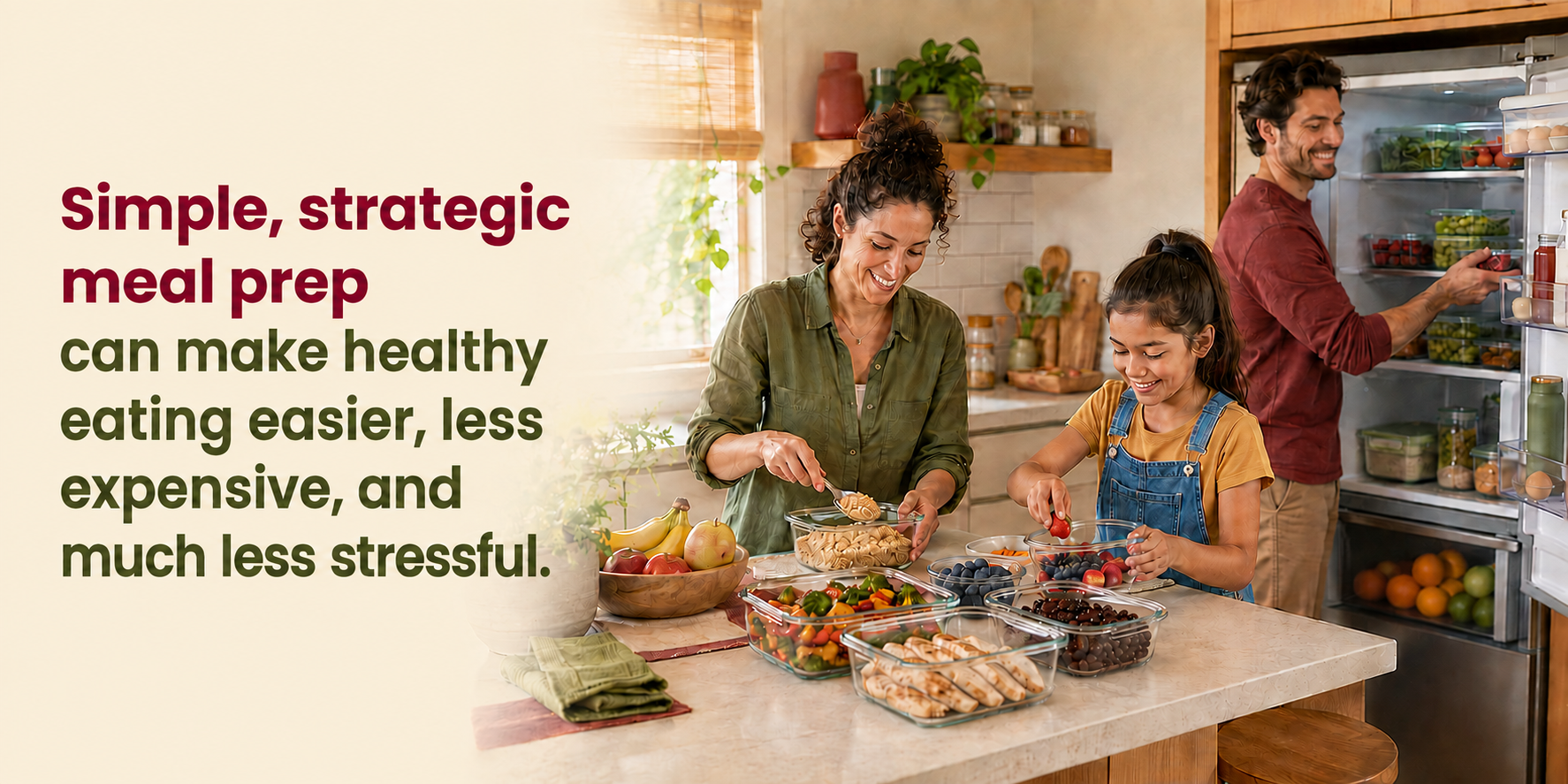
The good news is that healthy eating doesn't require spending your entire Sunday cooking twelve different meals. Simple, strategic meal prep can make healthy eating easier, less expensive, and much less stressful. Meal prep is really about one thing: making the healthy choice - the easy choice. You don't have to prepare every meal in advance. Instead, focus on preparing a few basic ingredients and having convenient options available when life gets busy.
Start With a Simple Plan
The biggest meal-prep mistake is trying to do too much. You don't need to plan seven completely different breakfasts, lunches, and dinners. Start by looking at your family's schedule for the coming week.
Ask:
Which nights will we be home for dinner?
Which nights are especially busy?
Who needs a packed lunch?
Which family members have practices or activities?
Which meals can be leftovers?
What foods do we already have in the refrigerator and pantry?
Spend 10–15 minutes planning before you go grocery shopping. A simple weekly plan might look like:
Monday: Chicken bowls
Tuesday: Tacos
Wednesday: Leftover chicken bowls
Thursday: Pasta with vegetables and lean protein
Friday: Homemade pizzas and salad
Saturday: Grilled burgers and vegetables
Sunday: Slow-cooker meal
The goal isn't perfection. The goal is to eliminate the daily question: "What's for dinner?"
Build Meals Around a Few Basic Ingredients
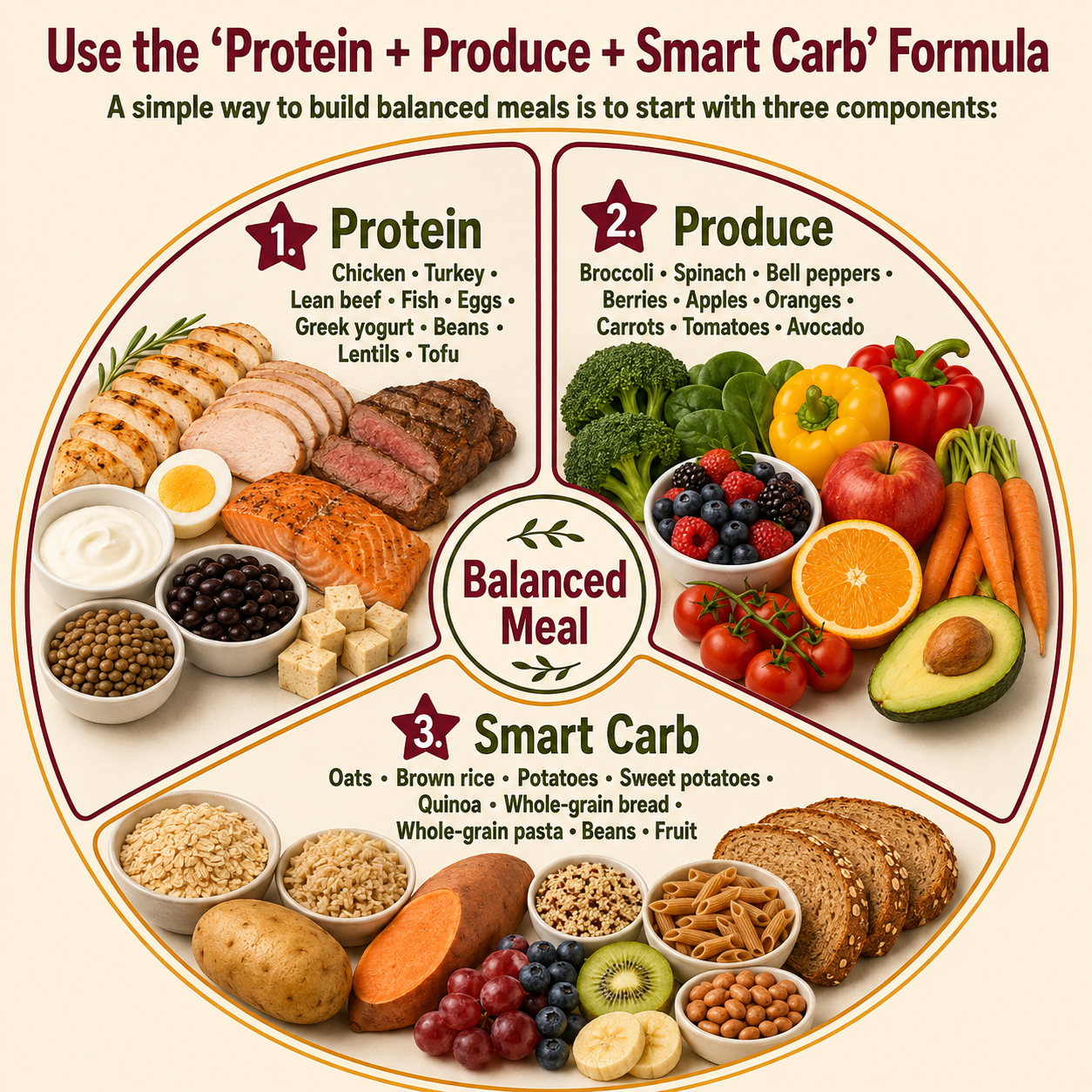
One of the easiest meal-prep strategies is to prepare ingredients that can be used in multiple meals. For example, cook a large batch of grilled chicken on Sunday. That chicken can become one of many dishes, such as:
Chicken bowls —Tacos — Salads — Wraps — Sandwiches — Pasta — Quesadillas
Instead of preparing six different meals, you've prepared one versatile protein. The same strategy works with vegetables and carbohydrates. Prepare a large batch of several different vegetables, such as:
Brown rice — Quinoa — Roasted potatoes — Sweet potatoes — Broccoli — Peppers — Carrots — Green beans
Then mix and match throughout the week. This approach saves time while giving your family variety.
Make Breakfast Easier
Breakfast doesn't have to be complicated. A few minutes of preparation can make busy mornings much easier. Try preparing:
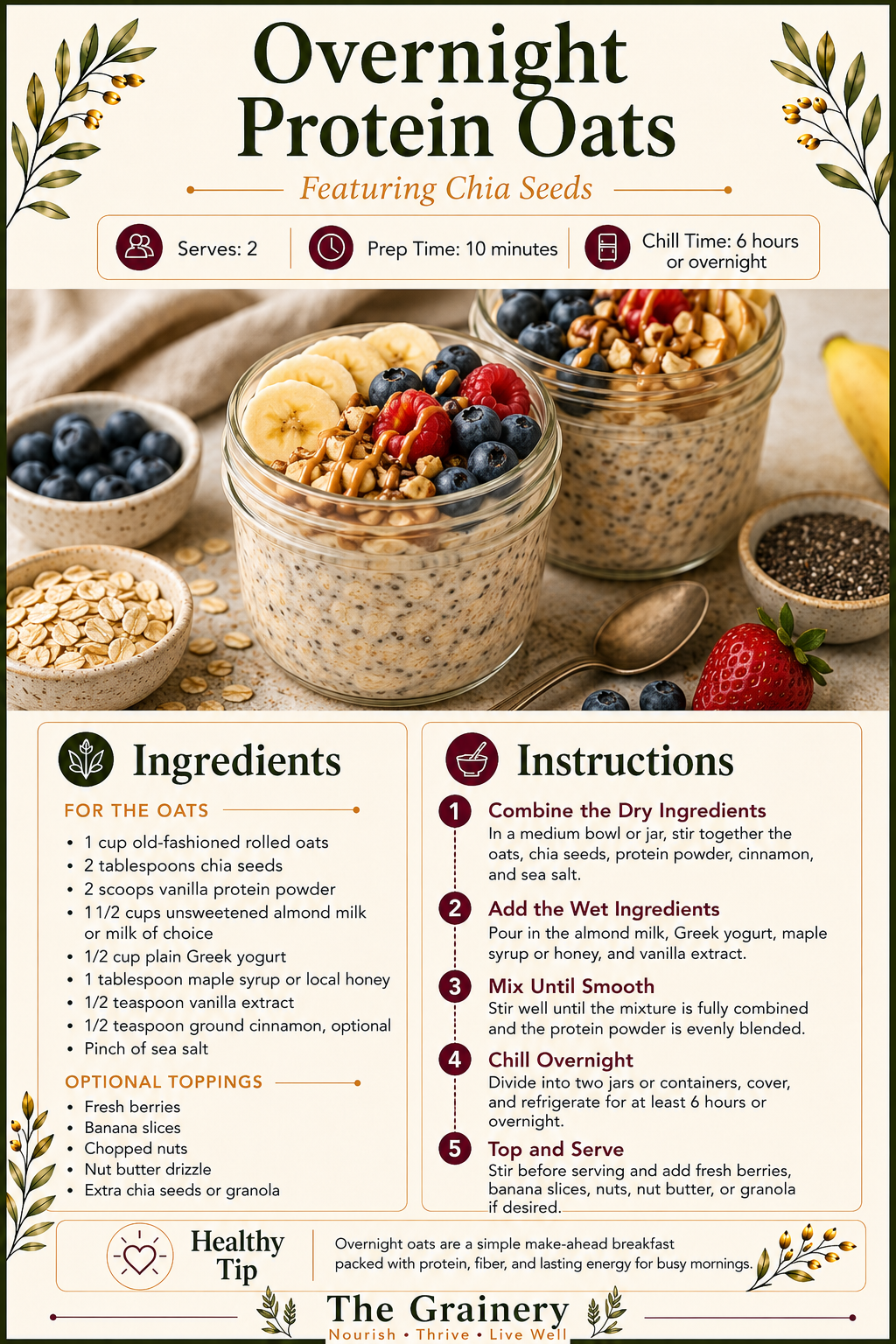
Overnight oats - Combine oats, milk or yogurt, chia seeds, fruit, and a small amount of honey. Refrigerate overnight and grab one in the morning.
Egg muffins - Whisk eggs with vegetables and lean protein, pour into muffin cups, and bake. Store them in the refrigerator for quick breakfasts.
Greek yogurt parfaits - Layer Greek yogurt, berries, granola, and nuts.
Smoothie packs - Prepare individual bags containing frozen fruit, spinach, and other smoothie ingredients. In the morning, add the contents to a blender with your preferred liquid and protein source.
The goal is to make breakfast something you can assemble in minutes rather than something you have to cook from scratch.
Prepare Lunches While You're Already Cooking
Don't wait until the morning to figure out lunch. When you're preparing dinner, make extra food intentionally. If you're cooking chicken and vegetables for dinner, cook enough for tomorrow's lunch. If you're making rice, make extra. If you're chopping vegetables for dinner, chop enough for salads or lunches. This is one of the easiest meal-prep habits because you're using the same cutting board, pan, ingredients, and cleanup.
Think: "Cook once, eat twice."
That simple mindset can save hours every week.
Create a Grab-and-Go Refrigerator
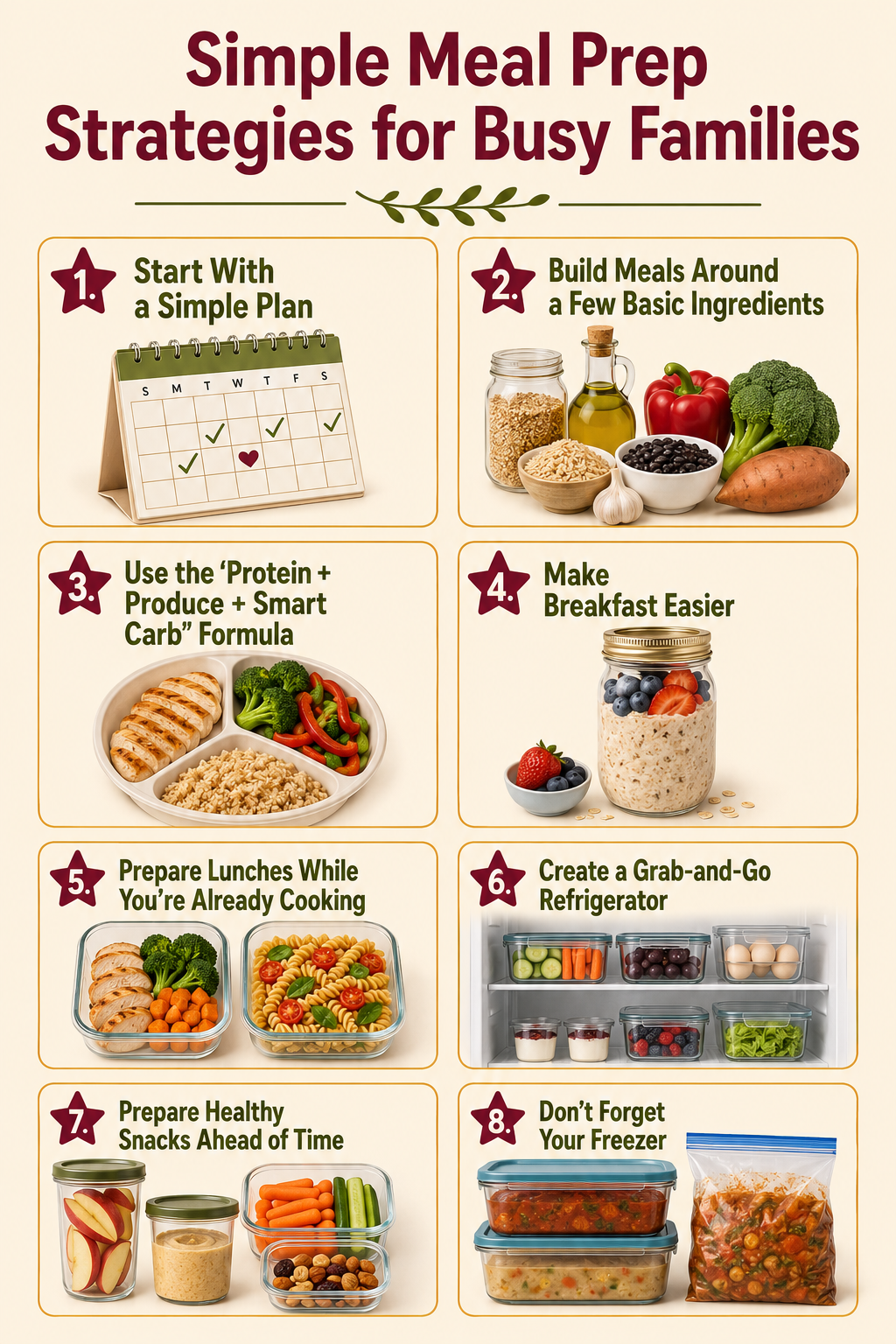
One of the best strategies for busy families is creating a dedicated area in the refrigerator for foods that are ready to eat. Stock it with:
Washed fruit
Cut vegetables
Hard-boiled eggs
Greek yogurt
Cheese
Hummus
Prepared chicken
Leftover meals
Individual portions
Healthy snacks
When everyone is hungry, they don't have to search the refrigerator or wait for someone to cook. They can simply grab something healthy and go.
Prepare Healthy Snacks Ahead of Time
Snacks can make or break healthy eating during a busy week. When you're hungry and nothing is prepared, it is much easier to grab chips, candy, fast food, or a convenience-store snack. Instead, prepare snacks in advance.
Try:
Apple slices with peanut or almond butter
Greek yogurt and berries
Trail mix
Hard-boiled eggs
Hummus and vegetables
Cheese and fruit
Homemade energy bites
Roasted nuts
Protein bars with simple ingredients
Popcorn
Portion snacks into individual containers or bags so they're ready to grab.
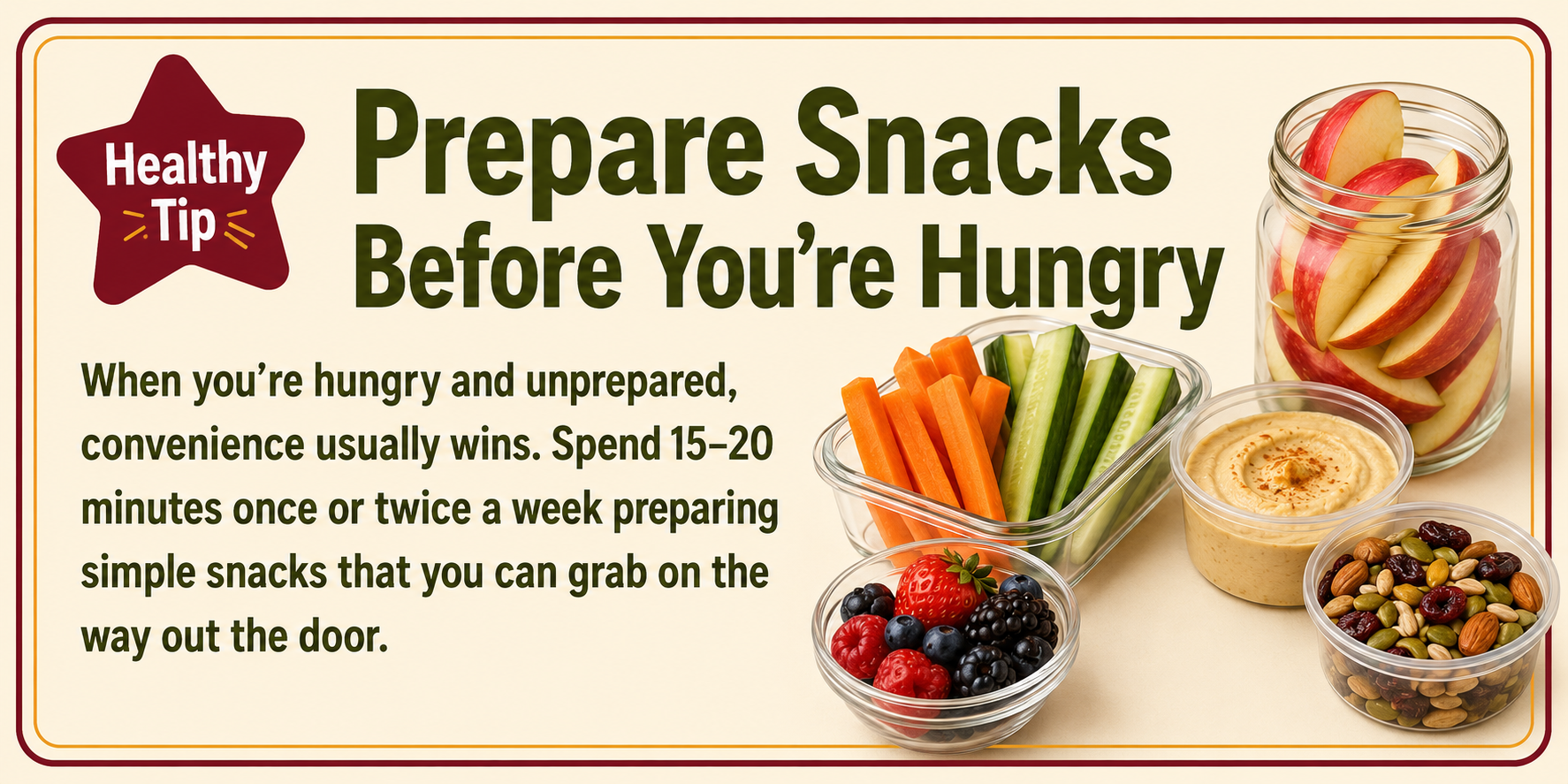
Thinking about snacks? Keep a few options in:
The refrigerator:
Greek yogurt, cheese, hard-boiled eggs, cut vegetables, fruit.
The pantry:
Nuts, seeds, whole-grain crackers, popcorn, protein bars.
The car or work bag:
Shelf-stable protein bars, nuts, dried fruit, or other nutritious options that won't spoil.
A prepared snack can help you avoid the vending machine, drive-through, or impulse purchase at the checkout. Make the healthy choice the convenient choice.
Don't Forget Your Freezer
Your freezer can be one of your best meal-prep tools. Freeze such healthy choices as:
Cooked chicken
Ground turkey
Soups
Chili
Homemade pasta sauce
Cooked rice
Smoothie ingredients
Berries
Bread
Individual meals
You can also intentionally make double batches of meals. For example, if you're making chili, make twice as much. Eat one portion this week and freeze the rest.
A few weeks of doing this can create a freezer full of homemade meals that are ready when life gets hectic.