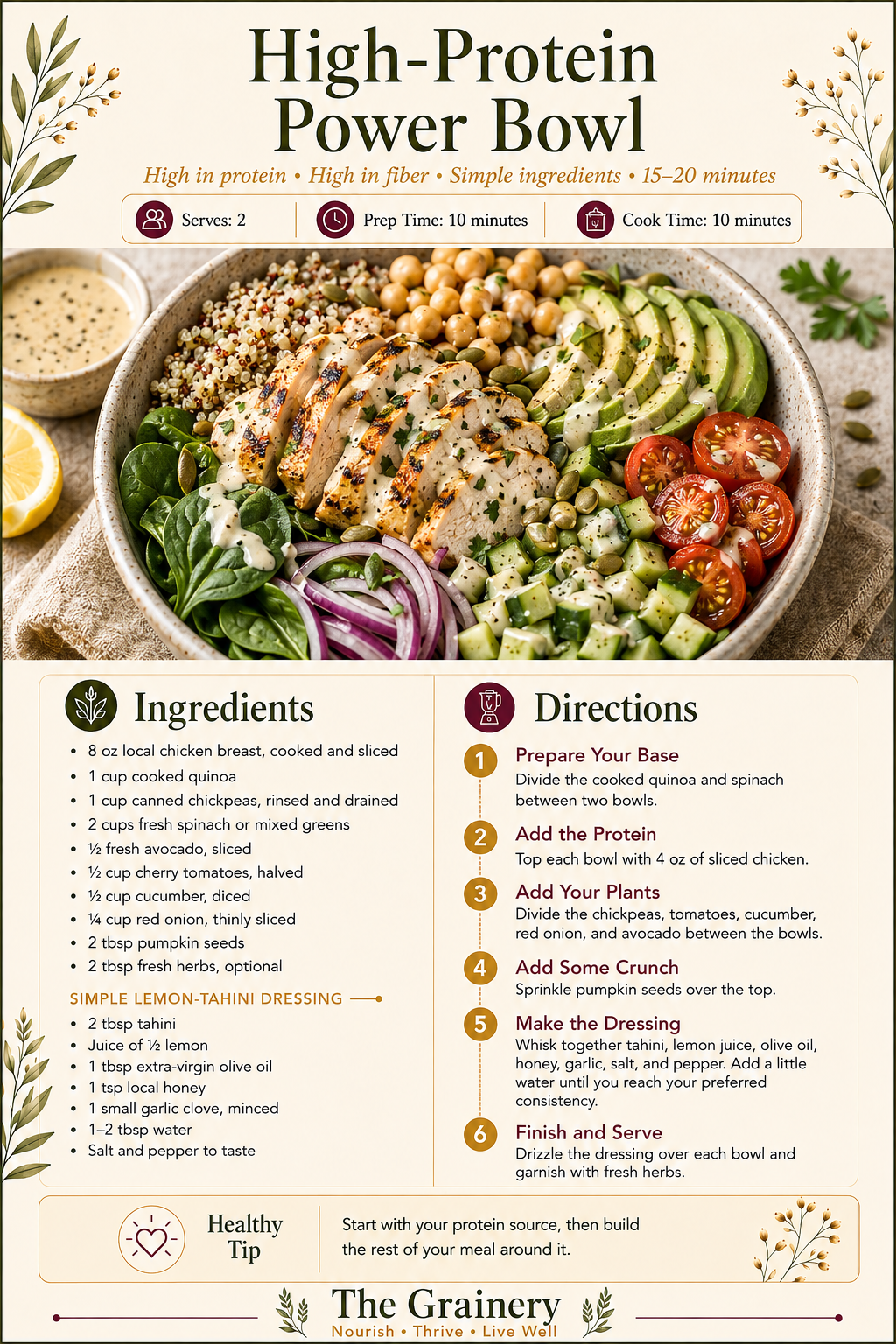
Protein: How Much Do You Really Need?
Walk into almost any grocery store or health food store today and you will see protein everywhere. Protein bars line the shelves, protein powders fill entire sections, Greek yogurt has become a staple, and food companies proudly advertise the number of grams of protein on the front of their packages. With all of this attention, it's easy to assume that everyone needs to eat as much protein as possible. But is more always better? How much protein do you actually need? Does it matter when you eat it? And if you're getting enough protein from food, do you really need a protein supplement?
The answer, like most things in nutrition, isn't quite as simple as looking for one magic number.
Protein is an essential nutrient that your body needs every day. It plays an important role in maintaining and repairing tissues, supporting muscle, producing enzymes and hormones, and carrying out countless other functions. As we move through different stages of life, however, our protein needs and the way our bodies use protein can change. Understanding protein doesn't require a complicated diet. It starts with understanding what protein actually does and how to make it a consistent part of your everyday meals.
What Does Protein Actually Do?
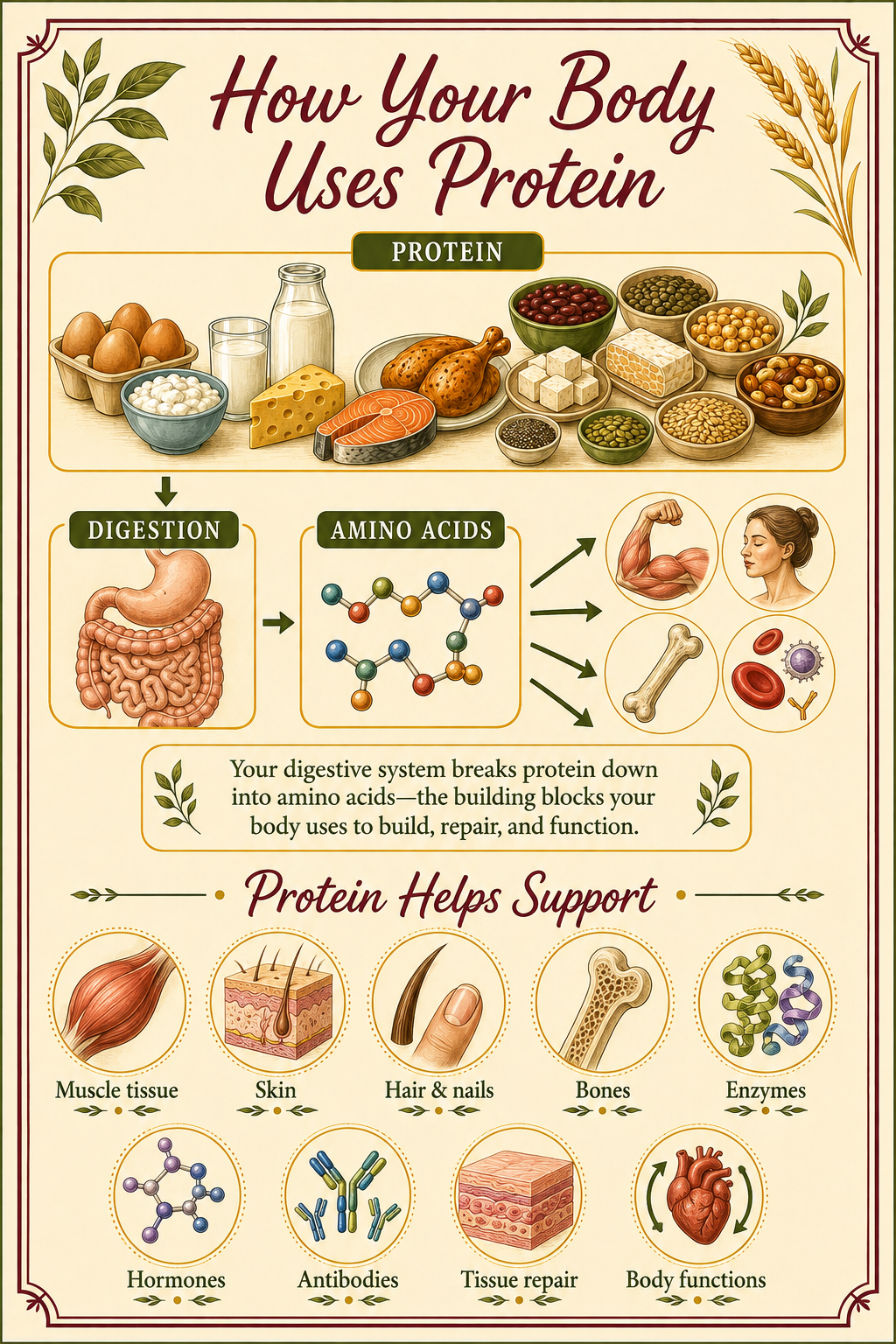
Protein is made up of amino acids, which are often described as the building blocks of the body. Your body uses amino acids to build and repair tissues and to make many of the proteins it needs to function. When you eat protein, your digestive system breaks it down into amino acids. Those amino acids can then be used for processes throughout the body.
Protein helps support muscle tissue, skin, hair, nails, bones, enzymes, hormones, antibodies, and many other structures and functions. Protein also has an important role in making meals satisfying. Compared with carbohydrates and fats, protein tends to be particularly effective at promoting feelings of fullness. Including a protein source in a meal can therefore make it easier for many people to feel satisfied between meals. This doesn't mean protein is a miracle nutrient. It simply means that it is an important part of a balanced diet.
Why Protein Matters More as We Age
One of the biggest reasons to pay attention to protein as we get older is muscle.
Beginning in adulthood, people can gradually lose muscle mass as they age. This process can accelerate later in life, particularly when physical activity decreases. Maintaining muscle isn't simply about looking strong. Muscle helps us perform everyday activities. It helps us climb stairs, carry groceries, get up from a chair, maintain balance, and remain physically independent. This is why maintaining muscle becomes increasingly important with age.
Getting adequate protein is one piece of the puzzle. Resistance training and regular physical activity are equally important. Think of it this way: exercise gives your muscles a reason to stay strong, while adequate nutrition provides the raw materials your body needs to maintain and repair them. For older adults, spreading protein throughout the day can be particularly useful. Instead of eating very little protein at breakfast and lunch and then consuming most of the day's protein at dinner, consider including a meaningful protein source at each meal.
That could mean eggs or Greek yogurt at breakfast, chicken or beans at lunch, and fish, beef, poultry, tofu, or another protein source at dinner.
Protein and Muscle: It's a Team Sport
If your goal is to maintain or build muscle, protein matters—but protein doesn't work alone. Resistance training is one of the most effective ways to stimulate muscle growth and maintenance. When you combine resistance exercise with adequate protein and sufficient overall nutrition, you give your body the tools it needs to support muscle tissue. This applies to everyone from competitive athletes to someone simply trying to remain active and independent.
You don't have to be a bodybuilder to benefit from paying attention to protein. A 60-year-old who performs strength training twice or three times per week and consistently eats adequate protein may be doing something very valuable for long-term health and function. Likewise, someone recovering from a period of inactivity may benefit from making protein a consistent part of meals while gradually returning to physical activity.
Protein should be viewed as part of a bigger picture—not as a substitute for exercise.
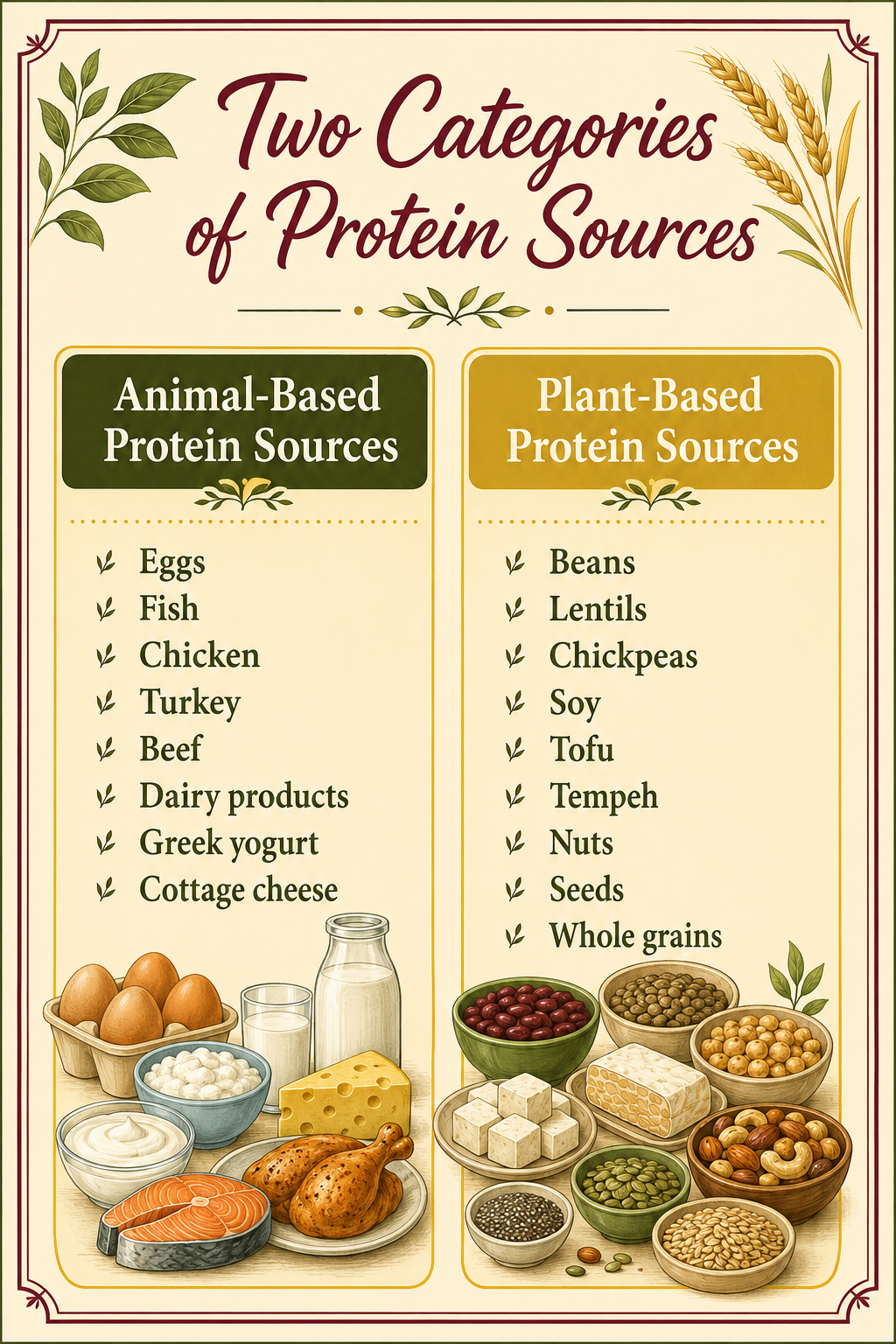
Animal vs. Plant Protein
Another common question is whether animal or plant protein is better. The good news is that you don't necessarily have to choose one.
Animal-based protein sources include:
Eggs
Fish
Chicken
Turkey
Beef
Dairy products
Greek yogurt
Cottage cheese
Plant-based protein sources include:
Beans
Lentils
Chickpeas
Soy
Tofu
Tempeh
Nuts
Seeds
Whole grains
Animal proteins generally provide all of the essential amino acids in amounts that make them highly useful for supporting the body's protein needs. Some plant proteins may contain lower amounts of certain essential amino acids, but a varied plant-based diet can provide plenty of protein and essential amino acids. For people who eat mostly or entirely plant-based diets, variety becomes especially important. You don't need to perfectly "combine proteins" at every meal. Eating a variety of plant foods throughout the day can provide the amino acids your body needs.
There is also another important consideration: whole foods provide more than protein. Beans provide fiber. Fish can provide omega-3 fats. Dairy products can provide calcium. Nuts and seeds provide healthy fats and minerals.
That's why the best approach is usually to think about the entire food—not just the protein number on the label.
How Much Protein Do You Need?
This is where things get interesting. Protein needs vary depending on factors such as age, body size, activity level, training status, overall health, and individual goals. For generally healthy adults, the basic Recommended Dietary Allowance is approximately 0.8 grams of protein per kilogram of body weight per day. However, people who are physically active, older adults, or those trying to build or maintain muscle may benefit from consuming more than this baseline amount.
For someone who weighs 180 pounds, for example, 0.8 grams per kilogram would provide roughly 65 grams of protein per day. That number should not automatically be interpreted as the ideal target for every 180-pound person. Individual circumstances matter. Athletes and people engaged in regular resistance training often consume substantially more protein than the basic RDA.
Rather than becoming obsessed with one perfect number, focus first on consistency. Ask yourself:
Am I including a quality protein source at most meals?
If the answer is yes, you're already moving in the right direction.
Does Protein Timing Matter?
Total daily protein intake is important, but how you distribute that protein throughout the day can also be useful. Imagine two people who both consume 120 grams of protein per day. Person A eats 10 grams at breakfast, 20 grams at lunch, and 90 grams at dinner. Person B eats approximately 30–40 grams at each meal.
The second pattern provides a more consistent supply of protein throughout the day and may be a more practical approach for supporting muscle protein synthesis, particularly when combined with resistance exercise.
You don't have to measure every gram. Instead, build meals around a protein source.
Breakfast might be eggs and Greek yogurt.
Lunch could be chicken, tuna, beans, or tofu.
A snack might be cottage cheese, Greek yogurt, or a protein smoothie.
Dinner could feature fish, chicken, turkey, beef, or a plant-based protein.
The goal is consistency rather than perfection.
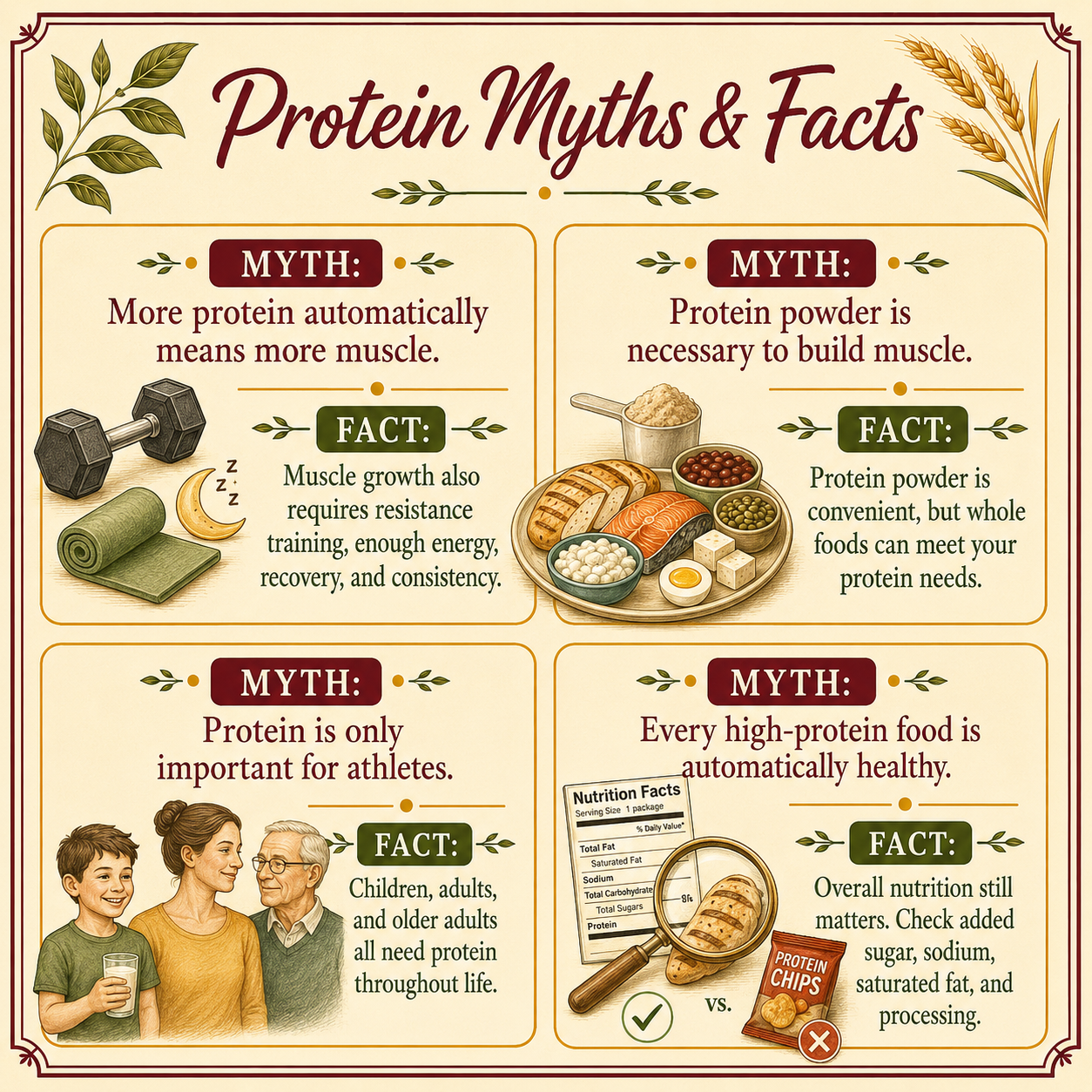
Common Protein Misconceptions
One of the biggest misconceptions is that eating more protein automatically means more muscle. It doesn't. Muscle growth requires an appropriate combination of resistance training, adequate protein, sufficient energy, recovery, and consistency.
Another misconception is that protein powder is necessary to build muscle. It isn't. Protein powder is food in a convenient form. It can be useful, but you can absolutely meet your protein needs through whole foods.
Some people also believe that protein is only important for athletes. That's another misconception. Protein is important throughout life. Athletes may have higher needs, but children, adults, and older adults all need protein.
Finally, some people assume that all high-protein foods are automatically healthy. That's not necessarily true. A highly processed food can contain a lot of protein and still contain significant amounts of added sugar, sodium, saturated fat, or other ingredients. The overall nutritional quality of the food still matters.
When Is Protein Powder Useful?
Protein powder can be extremely convenient. Consider someone who finishes a workout and has to get to work. They may not have time to cook chicken, rice, and vegetables. A protein shake can provide a simple way to add protein to a meal or snack. Protein powder can also be useful for:
People with busy schedules
Athletes
People who struggle to eat enough protein
Older adults with lower appetites
Smoothies and breakfast bowls
Convenient post-workout nutrition
People following vegetarian or vegan diets
Common protein powders include whey, casein, egg, soy, pea, and rice proteins. The best choice depends on your dietary preferences, tolerance, goals, and overall diet. When selecting a protein powder, don't just look at the largest number on the front of the container. Look at the serving size, protein amount, ingredient list, added sugars, and any certifications or third-party testing that may be important to you.
Protein Doesn't Have to Be Complicated
At the end of the day, you don't need to build your entire diet around protein. You simply need to give it the attention it deserves. Start by making protein a regular part of your meals. Choose a variety of foods. Combine protein with vegetables, fruits, whole grains, healthy fats, and other nutrient-dense foods.
If you're active, make sure you're eating enough overall and pairing adequate protein with resistance training and recovery.
And if you're older, remember that maintaining muscle is about much more than appearance. It's about strength, mobility, independence, and quality of life.
Protein isn't a magic bullet. It's simply one of the foundational nutrients your body needs—and one that deserves a place on your plate every day.RE
Resources:
National Institutes of Health, Office of Dietary Supplements — Protein and amino acid information
National Academies of Sciences, Engineering, and Medicine — Dietary Reference Intakes for Energy, Carbohydrate, Fiber, Fat, Fatty Acids, Cholesterol, Protein, and Amino Acids
International Society of Sports Nutrition — Position stands and reviews on protein and exercise
American College of Sports Medicine — Nutrition and physical activity guidance
Academy of Nutrition and Dietetics — Protein and healthy eating resources