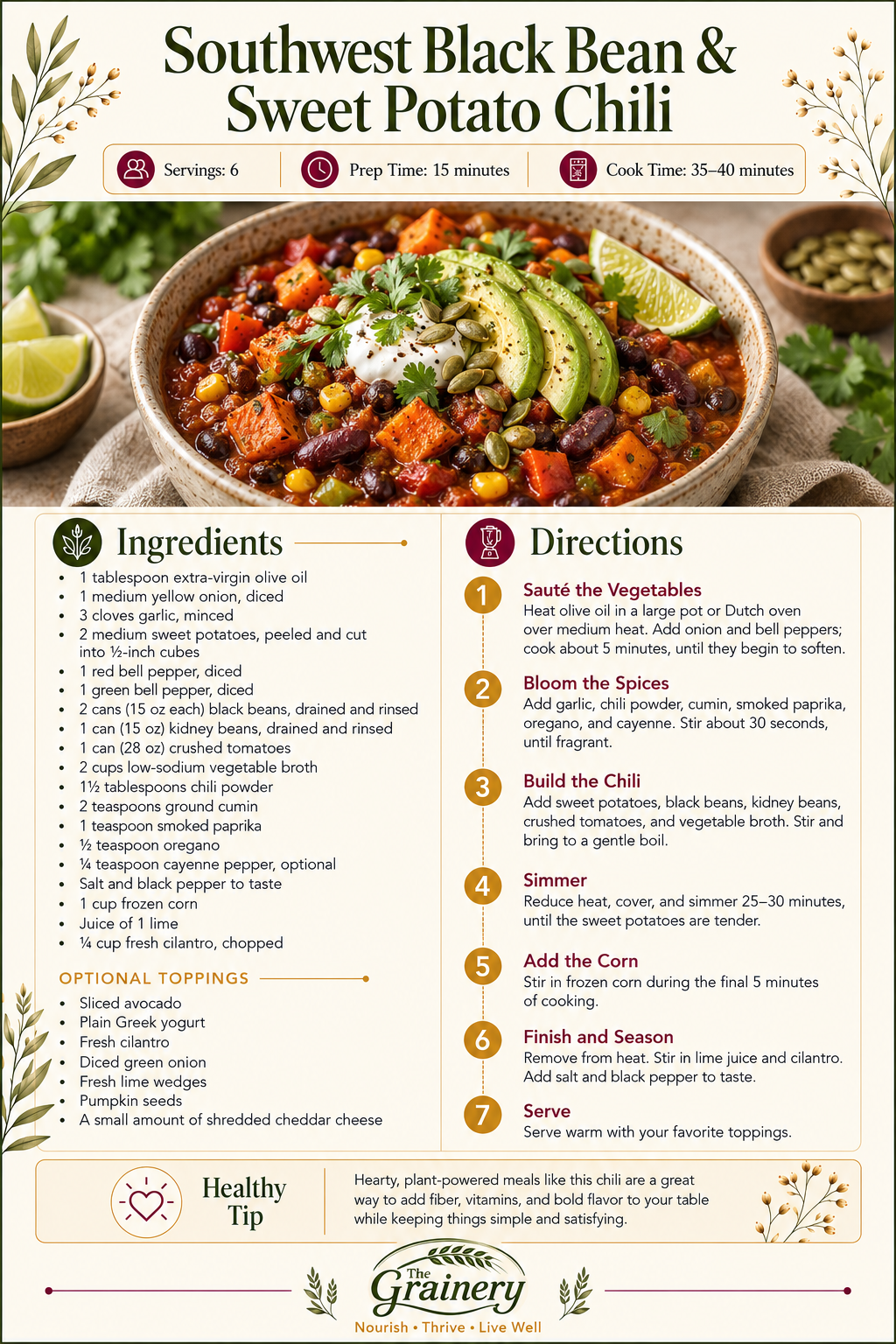
Why Fiber Matters: Simple Ways to Eat More Every Day
When people talk about nutrition, certain nutrients tend to get all the attention. Protein is discussed for building muscle. Healthy fats are praised for supporting the heart and brain. Vitamins and minerals are often the focus of supplements and wellness conversations. Carbohydrates get plenty of attention—both positive and negative.
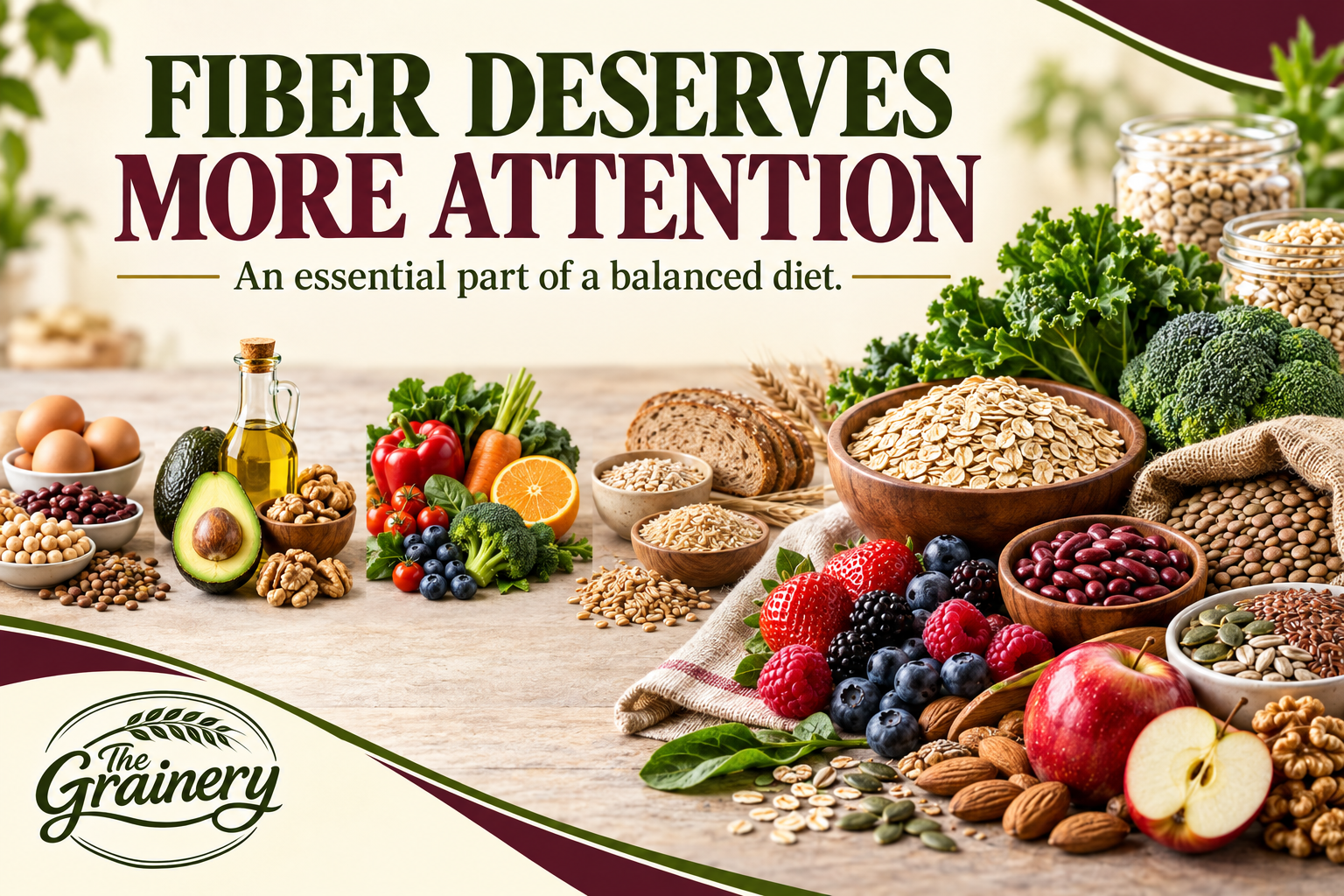
But there is one incredibly important part of our diet that often doesn't get nearly enough attention: fiber.
Fiber isn't flashy. It doesn't come with the same marketing buzz as protein powders or superfoods. You probably won't hear someone bragging about how many grams of fiber they ate yesterday.Yet fiber quietly plays an important role in some of the body's most basic and important functions. It helps keep our digestive system moving, helps us feel satisfied after meals, supports a healthy gut microbiome, and can contribute to heart and metabolic health.
And here's the problem: most Americans simply aren't getting enough of it.
The current Daily Value for dietary fiber is 28 grams per day based on a 2,000-calorie diet. But instead of thinking about fiber as another number you have to track, it may be more helpful to think about fiber as a reminder to eat more of the foods our bodies were designed to thrive on—vegetables, fruits, beans, lentils, whole grains, nuts, and seeds.
So, What Exactly Is Fiber?
Fiber is a type of carbohydrate found primarily in plant foods. Unlike many carbohydrates, our bodies don't completely digest and absorb fiber. Instead, fiber travels through the digestive system, where it can perform some pretty remarkable jobs. There are different types of fiber, and they don't all behave the same way.
Some fiber helps add bulk to stool and supports regular bowel movements. Other types absorb water and form a gel-like substance in the digestive tract. Still other types are fermented by the beneficial bacteria living in our gut. That's one of the reasons variety matters. Eating an apple provides a different combination of fibers and plant compounds than eating a bowl of oatmeal. Beans bring something different to the table than berries or broccoli. Chia seeds and flaxseeds provide different types of fiber than whole grains.
Instead of looking for one "best" source of fiber, the goal should be to eat a wide variety of plant foods.
Fiber and Your Digestive System
Let's start with the benefit most people associate with fiber: digestion. Our digestive system is constantly at work, processing everything we eat and drink. Fiber helps support this process in several ways. Insoluble fiber adds bulk to stool and helps move material through the digestive tract. Soluble fiber absorbs water and can help create a softer, more manageable digestive environment.
This is why foods such as vegetables, fruits, beans, whole grains, nuts, and seeds can be such valuable parts of a healthy diet.
But there's an important point that often gets overlooked. If your current diet is low in fiber, don't suddenly go from eating very little fiber to eating huge amounts of beans, vegetables, bran, and seeds overnight. Your digestive system may not appreciate the change. A gradual increase in fiber, along with adequate fluid intake, can help your body adjust.
Think of it as training your digestive system just like you would train a muscle: progress gradually.
Fiber Doesn't Just Help Your Gut—It Helps Feed It
Here's where fiber gets even more interesting. Your digestive tract is home to trillions of microorganisms that make up what we commonly call the gut microbiome. Some types of dietary fiber become food for these microorganisms. As gut bacteria ferment certain fibers, they produce compounds that can influence the environment of the digestive tract.
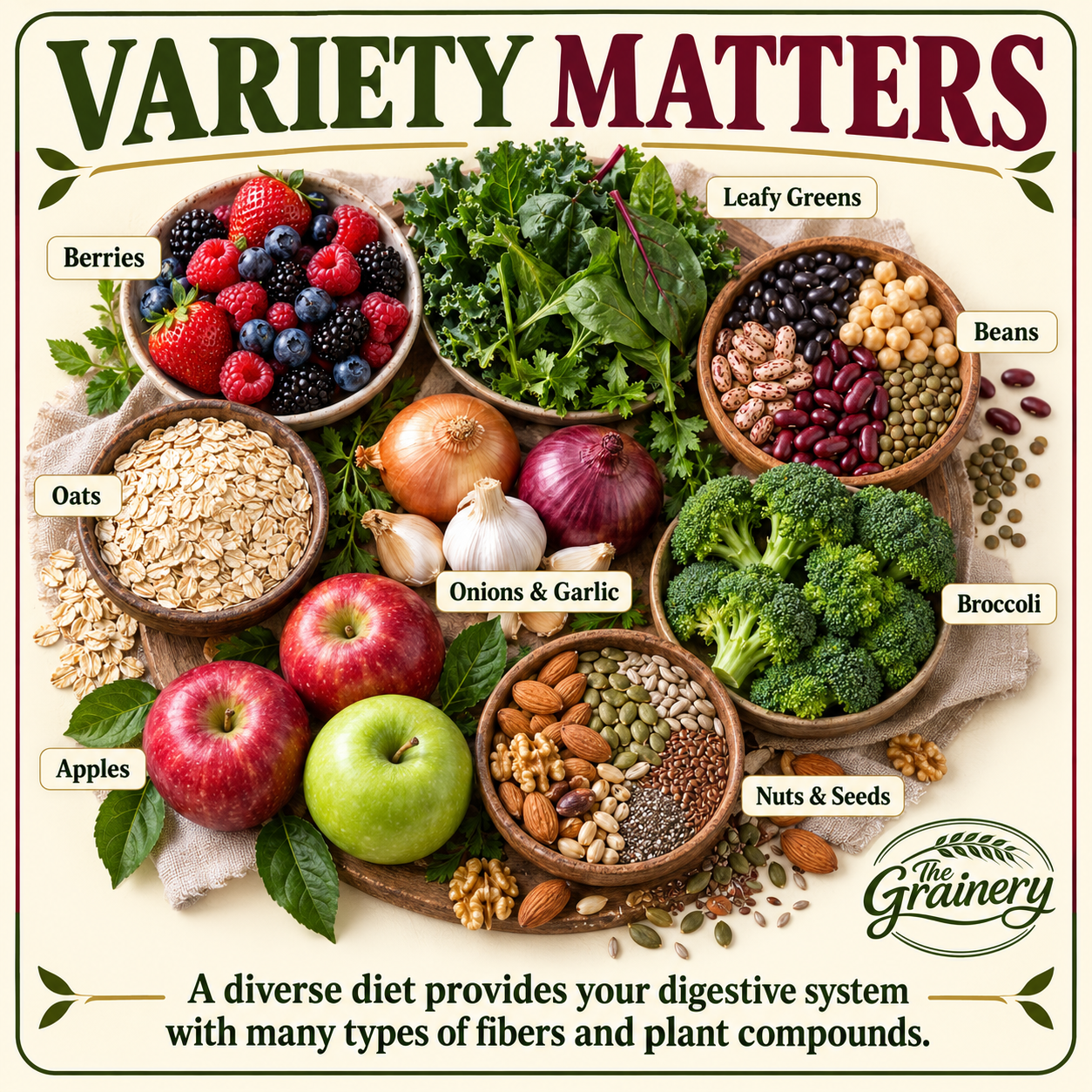
And this is another reason eating a variety of plant foods is so important. You don't necessarily want to eat the same vegetable every day and call it good. You want variety.
The more diverse your diet is, the more diverse the types of fibers and plant compounds you're providing to your digestive system. Research from the National Institutes of Health has highlighted that different types of dietary fiber can have different effects on the gut microbiome.
In other words, fiber isn't just something you eat to keep things moving. It can also help feed the ecosystem living inside you.
Fiber Can Help You Feel Full
Think about the difference between eating a whole apple and drinking a glass of apple juice. The juice can be consumed in a matter of seconds. A whole apple takes longer to chew, contains fiber, and generally provides a more satisfying eating experience. This is one reason high-fiber foods can be helpful when you're trying to build meals that keep you satisfied.
Fiber-rich foods often take longer to chew and digest, and certain types of fiber can slow digestion. That combination can help you feel comfortably full after eating. This doesn't mean fiber is a magic weight-loss nutrient. It means that choosing foods that naturally contain fiber can make it easier to build meals that are satisfying without relying heavily on highly processed foods.
Imagine starting your morning with a pastry and a sweetened coffee. Now compare that with oatmeal topped with berries, chia seeds, walnuts, and Greek yogurt. Both are breakfast. But the second option gives your body a combination of fiber, protein, healthy fats, vitamins, minerals, and other nutrients.
That's the power of looking at the whole meal, rather than one individual nutrient.
Fiber and Heart Health
Fiber also has an important relationship with cardiovascular health.
Certain soluble fibers can help support healthy cholesterol levels. Oats and barley, for example, contain a type of soluble fiber called beta-glucan. But once again, the story is bigger than fiber alone. Foods that naturally contain fiber—beans, lentils, fruits, vegetables, whole grains, nuts, and seeds—also provide a variety of nutrients and beneficial plant compounds.
This is why a healthy eating pattern is more important than finding a single "superfood." You don't need to eat one perfect food. You need to consistently eat a variety of nutritious foods. The American Heart Association recommends emphasizing fiber-rich foods such as vegetables, fruits, whole grains, legumes, nuts, and seeds as part of an overall heart-healthy eating pattern.
What Does a High-Fiber Diet Actually Look Like?
It doesn't have to be complicated. Imagine starting your morning with a bowl of oatmeal topped with blueberries, chia seeds, and walnuts. At lunch, you have a large salad with mixed greens, vegetables, chickpeas, avocado, and grilled chicken. For an afternoon snack, you grab an apple and a handful of almonds. Dinner might be salmon, roasted broccoli, and quinoa.
Nothing about that day requires a special diet. There are no complicated recipes. You simply build meals around whole foods that naturally contain fiber. That's the approach we like at Healthy Habits: build your diet around real food first.
Some of the best sources include berries, apples, pears, avocados, broccoli, Brussels sprouts, carrots, sweet potatoes, peas, beans, lentils, chickpeas, oats, barley, quinoa, brown rice, chia seeds, flaxseeds, almonds, walnuts, and pumpkin seeds. The more of these foods you regularly include, the easier it becomes to increase your fiber intake naturally.
What About Fiber Supplements?
Fiber supplements can certainly have a place in some people's diets. But they shouldn't be viewed as a replacement for vegetables, fruits, legumes, whole grains, nuts, and seeds. A fiber supplement can provide fiber.
A bowl of berries provides fiber plus vitamins, minerals, water, antioxidants, and other plant compounds. A serving of beans provides fiber plus protein, minerals, and other nutrients. An apple provides fiber plus hydration and a variety of beneficial plant compounds.
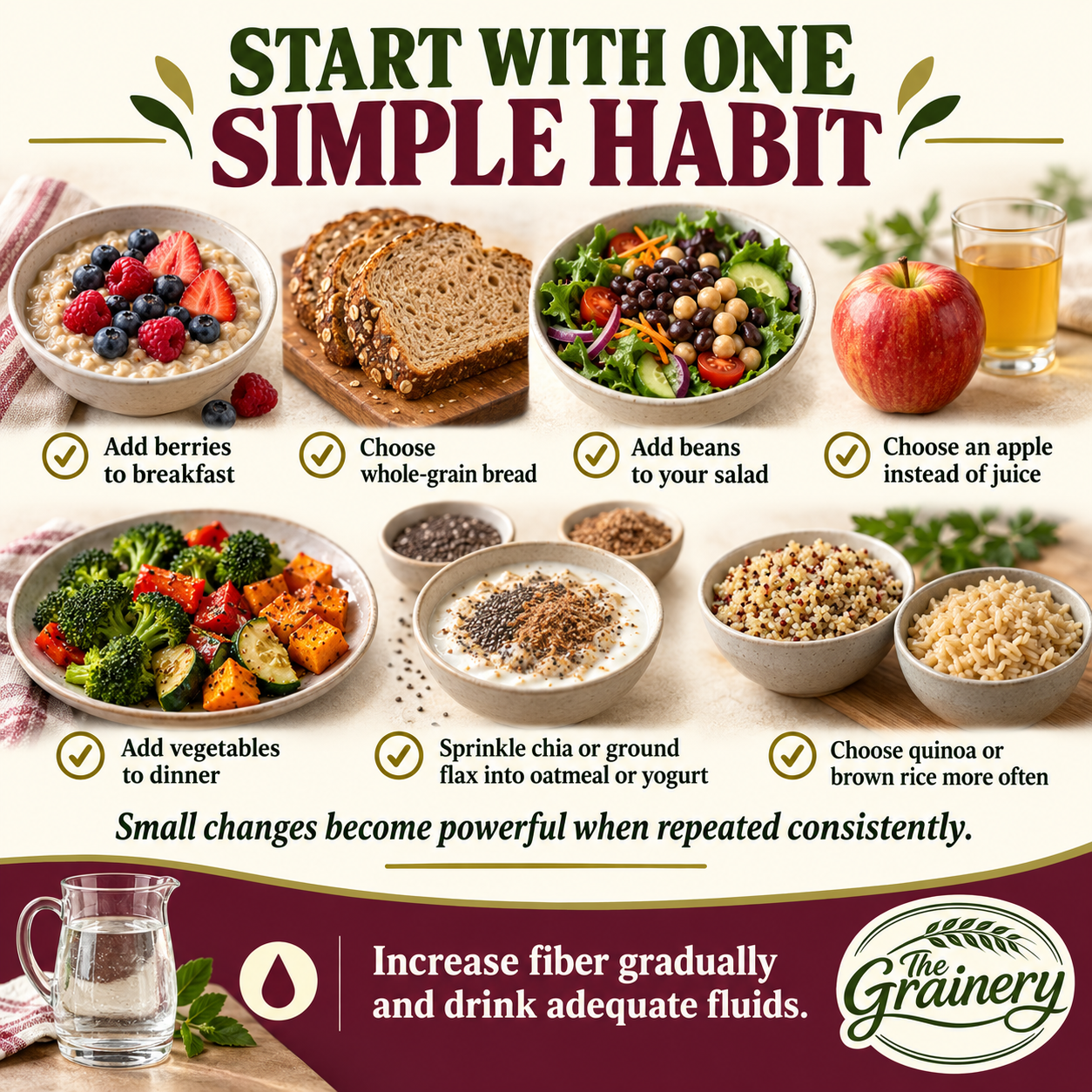
The goal isn't simply to hit a fiber number. The goal is to build a diet that naturally provides the fiber your body needs.
Start Small and Build
If you're reading this and thinking, "I'm nowhere near 28 grams of fiber a day," don't worry.
You don't need to completely change your diet tomorrow.
Small changes become powerful when you repeat them consistently. And if you're increasing your fiber intake, remember to increase gradually and drink adequate fluids.
The Healthy Habits Bottom Line
Fiber may not be the most exciting topic in nutrition, but it is one of the most important. It supports digestion. It helps nourish your gut microbiome. It can help you feel satisfied after meals. Certain types of fiber can support healthy cholesterol levels. And perhaps most importantly, fiber naturally comes packaged with many of the foods we already know are good for us.
Instead of thinking about fiber as something you need to "get enough of," think of it as a simple question you can ask throughout your day: "Where's the plant food?" You don't have to eat perfectly. You just have to keep making better choices.
And when it comes to fiber, those small choices can add up to a very big difference.
Resources
U.S. Food & Drug Administration (FDA)
How to Understand and Use the Nutrition Facts Label — Information on the Nutrition Facts label and the current 28-gram Daily Value for dietary fiber.
National Institutes of Health (NIH)
Health Benefits of Dietary Fibers Vary — Research examining how different types of dietary fiber can affect the gut microbiome and health.
MedlinePlus / U.S. National Library of Medicine
Dietary Fiber — Overview of dietary fiber, including soluble and insoluble fiber, food sources, and strategies for increasing intake.
American Heart Association
8 Ways to Focus on Fiber — Practical strategies for incorporating more fiber-rich foods into your diet.
American Heart Association
Whole Grains, Refined Grains and Dietary Fiber — Information on whole grains and the role of fiber in a heart-healthy eating pattern.