

Eating for Healthy Aging
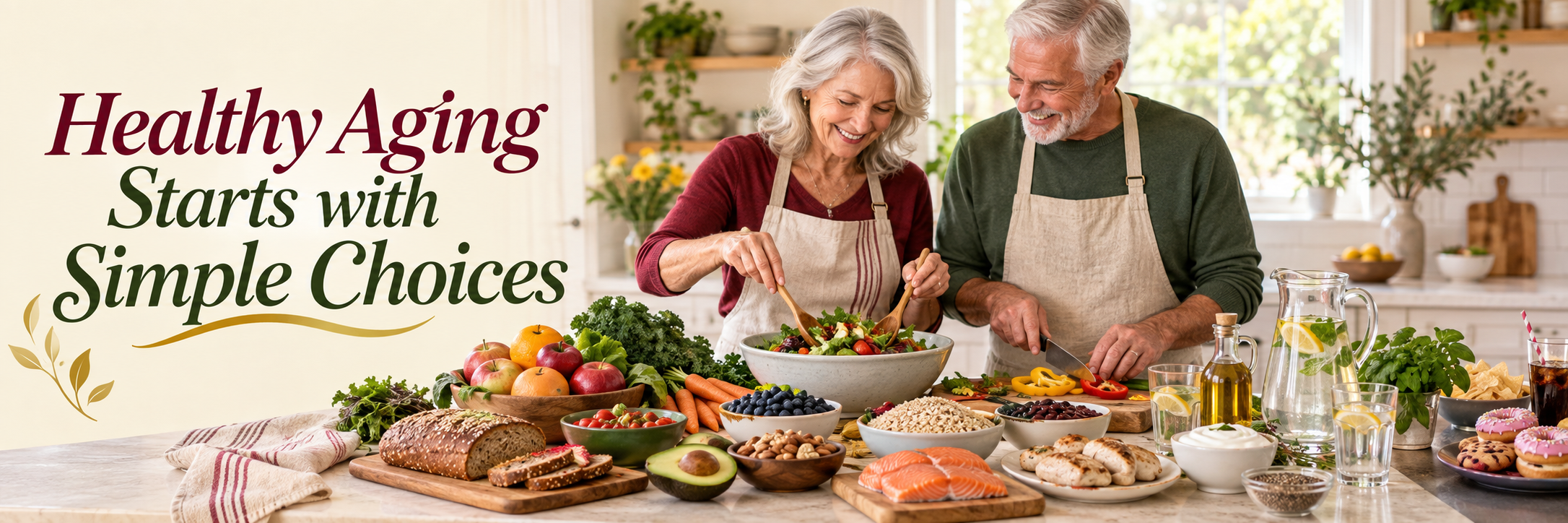
Hint! The answers are in the blog!
Aging is something every one of us experiences, but how we age is influenced by much more than the number of candles on our birthday cake. Our bodies change over time. Muscle mass can gradually decline. Bone health becomes increasingly important. Appetite may change. We may become less active, and our calorie needs may decrease even though our need for many vitamins, minerals, protein, fiber, and other nutrients remains important.
This is why healthy aging isn't simply about eating less as we get older. It's about making the food we do eat count. The goal isn't to find a magical food, supplement, or diet that stops aging. There isn't one. Instead, healthy aging is about creating eating and lifestyle habits that help us maintain strength, mobility, cardiovascular health, cognitive function, and independence for as long as possible.
And the good news is that it is never too early—or too late—to start.
Healthy Aging Begins With the Basics
When people hear the phrase "healthy aging," they may immediately think about supplements, specialized diets, or complicated nutrition strategies. But some of the most important principles are surprisingly simple. Eat a variety of vegetables and fruits. Choose whole grains more often. Include quality sources of protein. Eat healthy fats. Get enough fiber. Stay hydrated. Limit excessive added sugars, sodium, and highly processed foods.
The National Institute on Aging describes healthy eating as a cornerstone of healthy aging and recommends choosing a variety of nutrient-dense foods across the major food groups. That idea of nutrient density becomes particularly important as we age. Our bodies may require fewer calories as activity levels and metabolism change, but that doesn't mean we need fewer nutrients. In fact, older adults can need to be more intentional about choosing foods that provide plenty of nutrition without simply adding calories.
Think of it this way: if you're eating less food overall, each meal has an opportunity to provide something valuable.
Protein Becomes Increasingly Important
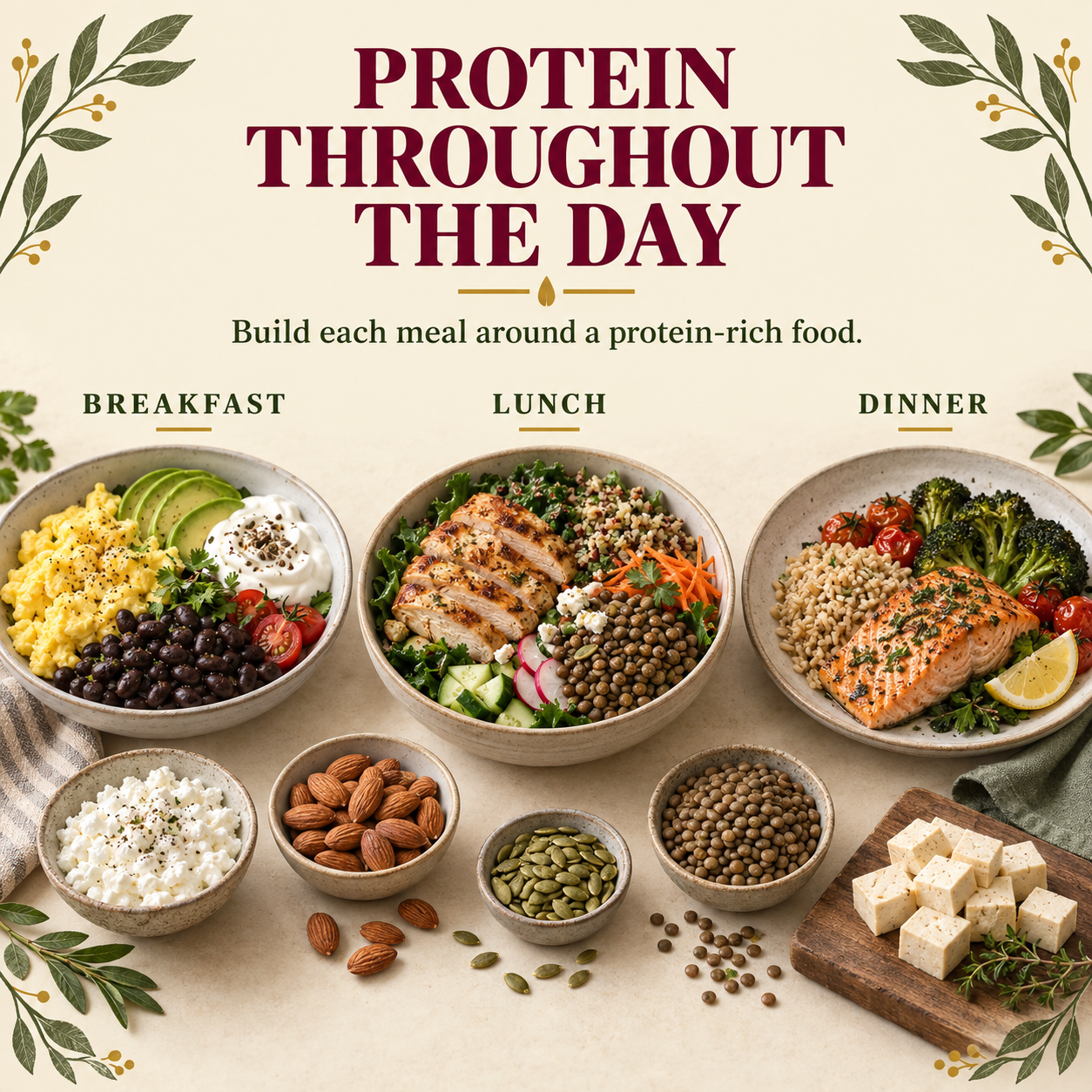
One of the biggest nutritional priorities as we age is maintaining muscle. Muscle isn't just about appearance or athletic performance. It helps us walk, climb stairs, carry groceries, get up from a chair, maintain balance, and remain independent. As we get older, maintaining muscle can become more challenging. This makes regular resistance exercise and adequate protein especially important components of an overall healthy-aging strategy. Rather than thinking about protein as something reserved for athletes, consider it a basic building block of healthy aging.
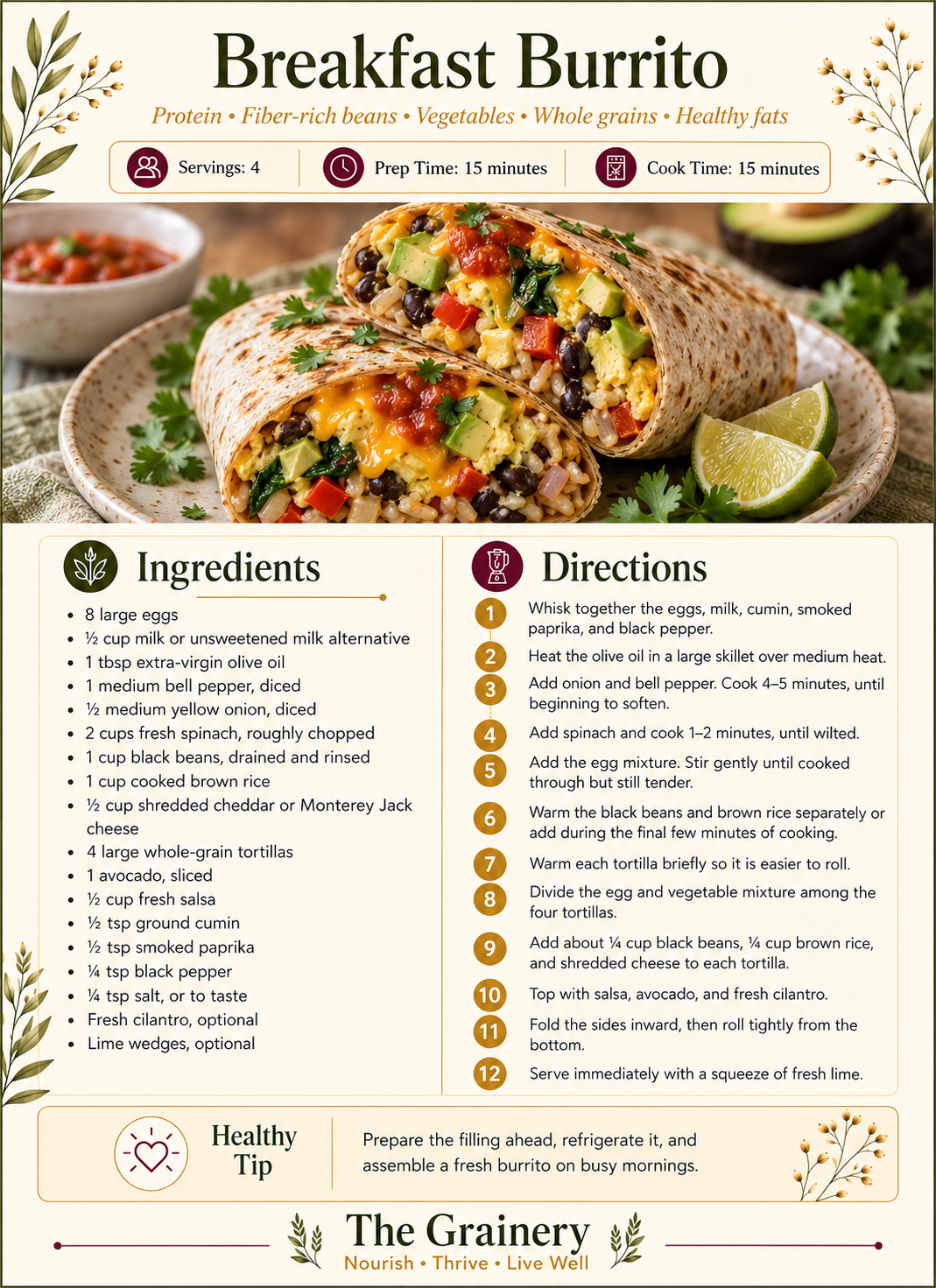
Eggs, Greek yogurt, cottage cheese, fish, poultry, lean meats, beans, lentils, tofu, nuts, seeds, and other protein-rich foods can all have a place in a balanced eating pattern. One useful strategy is to distribute protein throughout the day rather than eating very little protein at breakfast and lunch and trying to make up for it at dinner. A breakfast containing eggs and black beans, for example, provides a much more substantial protein foundation than a breakfast consisting primarily of refined carbohydrates.
And protein isn't only about muscle. It is also involved in maintaining tissues, enzymes, hormones, immune function, and many other processes throughout the body.
Don't Forget Your Bones
Healthy aging also means paying attention to bone health. Bones are living tissue, and maintaining them requires adequate nutrition as well as physical activity. Calcium and vitamin D are particularly important. Calcium provides structural support for bones, while vitamin D helps the body absorb calcium and plays other important roles in the body. The National Institute on Aging notes that calcium and vitamin D work together to support strong bones and highlights foods such as dairy products, canned fish with soft bones, leafy green vegetables, fortified foods, and fatty fish as potential sources.
But healthy bones aren't built by nutrition alone. Weight-bearing activity and resistance training are also important pieces of the puzzle. Walking, hiking, strength training, climbing stairs, and other weight-bearing activities can help support physical function as we age. Regular physical activity also provides benefits for cardiovascular health, metabolic health, sleep, and mental well-being.
This is one of the most important lessons of healthy aging: nutrition and movement work together.
Fiber Is a Long-Term Investment
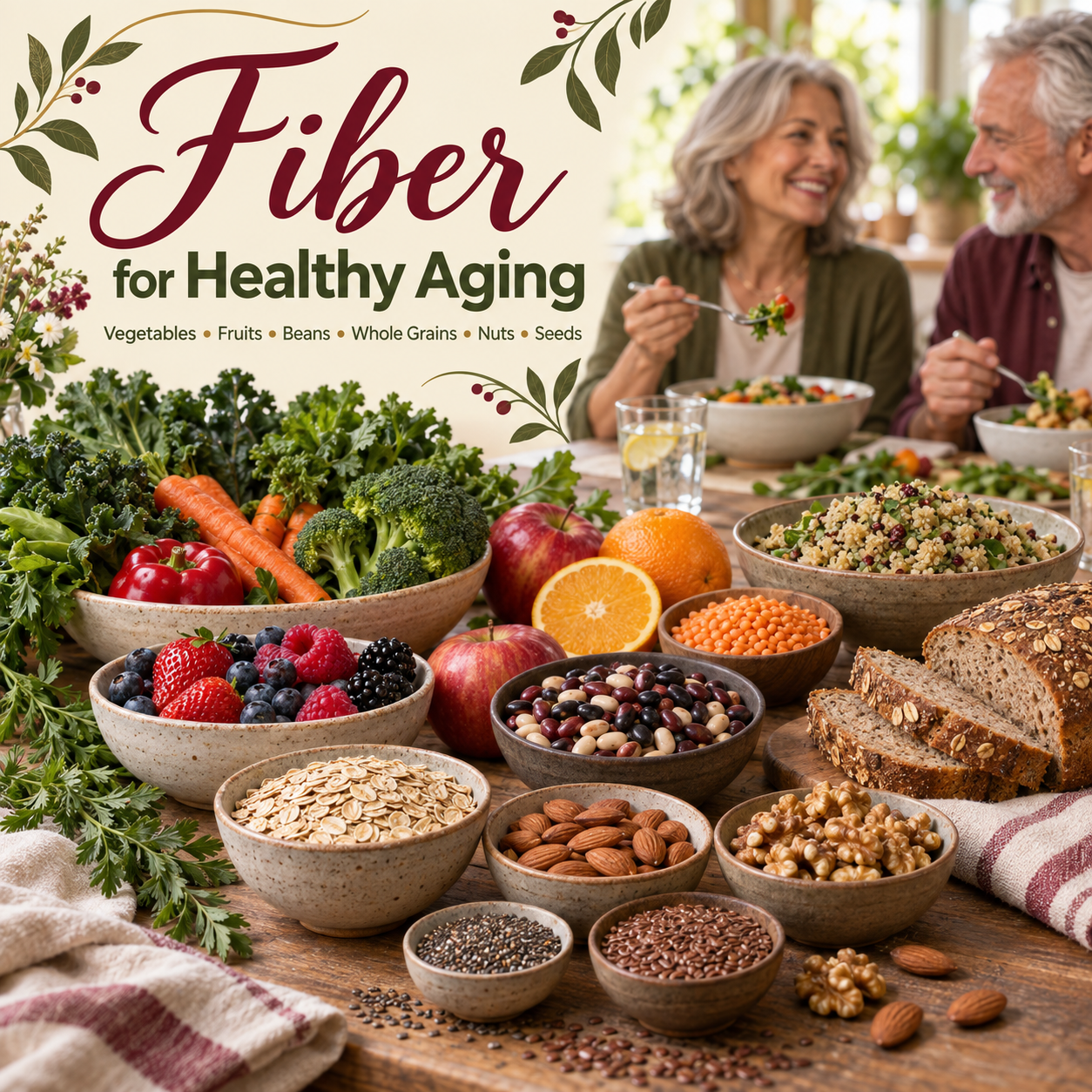
If you've been following our Healthy Habits nutrition series, you've probably heard us talk about fiber before. That's because fiber deserves a permanent place in a healthy-aging eating pattern. Fiber supports digestive health and can contribute to feelings of fullness. Fiber-rich foods—including vegetables, fruits, beans, lentils, whole grains, nuts, and seeds—also provide a variety of vitamins, minerals, and plant compounds.
The National Institute on Aging recommends getting fiber primarily from foods and increasing intake gradually to help minimize digestive discomfort. Fiber also fits naturally into an overall heart-healthy eating pattern. Instead of thinking about fiber as a supplement you have to remember to take, think about it as something that naturally comes with the foods you're choosing.
Eat an apple instead of drinking apple juice.
Choose oatmeal instead of a refined breakfast pastry.
Add beans to your soup or chili.
Choose a whole-grain bread.
Put another vegetable on your dinner plate.
Those small decisions can make a significant difference over time.
Eat for Your Heart
Aging well also means taking care of cardiovascular health. A heart-healthy eating pattern emphasizes vegetables, fruits, whole grains, lean or plant-based protein sources, and foods rich in unsaturated fats while limiting excessive saturated fat, added sugars, and sodium. The National Institute on Aging specifically recommends a heart-healthy diet containing fruits, vegetables, lean proteins, and fiber-rich foods.
This doesn't mean you can never enjoy a cheeseburger, dessert, or favorite comfort food. Healthy aging isn't about perfection. It's about what your overall eating pattern looks like most of the time. If the majority of your meals are built around minimally processed foods and plenty of plants, there is room for foods that are simply enjoyable. Food should nourish us, but it should also be something we enjoy sharing with family and friends.
Feed Your Brain, Too
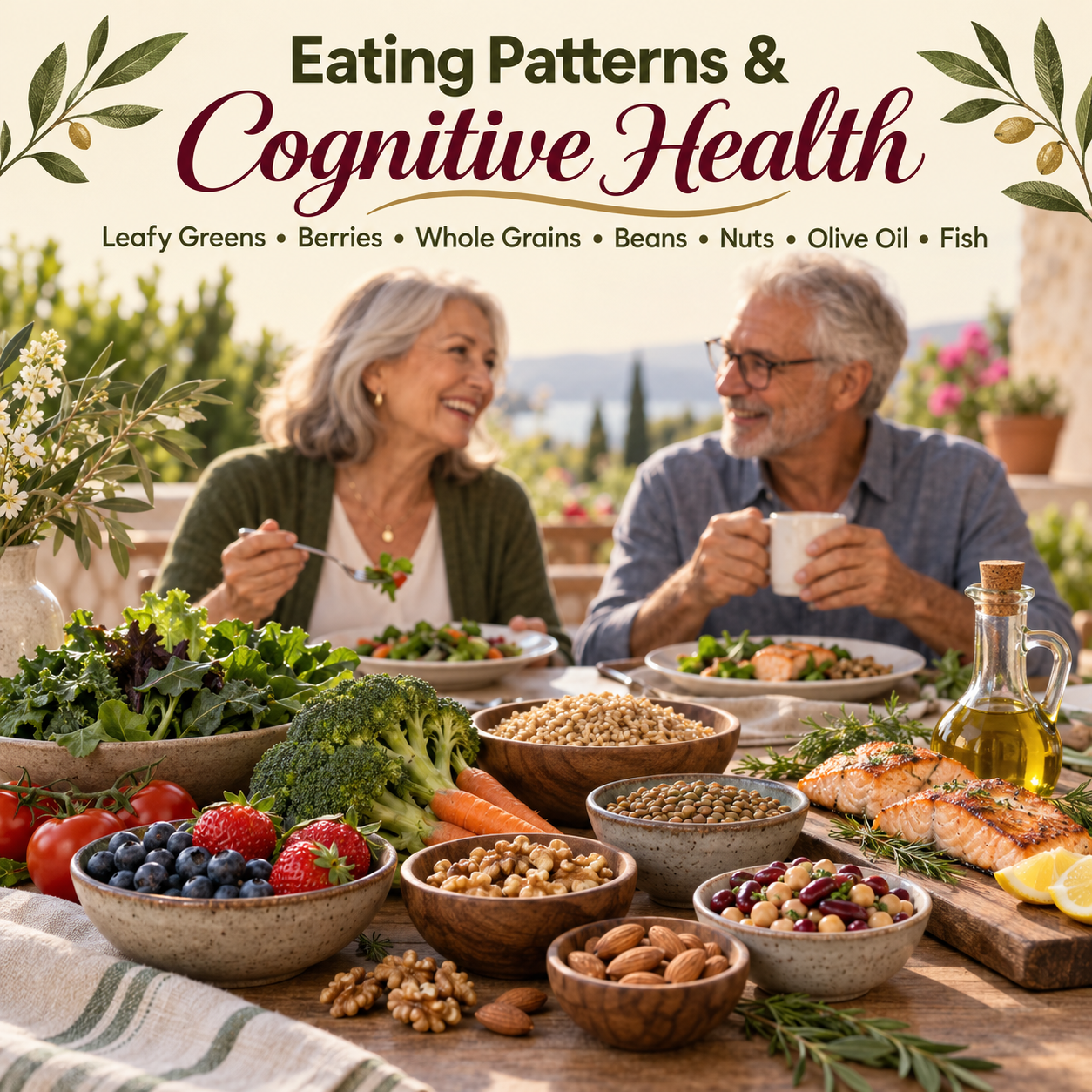
One of the most interesting areas of healthy-aging research involves the relationship between diet and cognitive health. Researchers have studied eating patterns such as the Mediterranean and MIND diets because they emphasize foods including vegetables, leafy greens, berries, whole grains, beans, nuts, olive oil, and fish. Research has found associations between these types of eating patterns and measures of cognitive health, although scientists continue to study exactly how diet influences cognitive decline and dementia risk. The National Institute on Aging emphasizes that the evidence is still developing and that no specific diet has been proven to prevent Alzheimer's disease.
That distinction is important.
We shouldn't promise that eating blueberries or leafy greens will prevent dementia. Instead, we can recognize that an eating pattern rich in vegetables, fruits, whole grains, legumes, nuts, fish, and healthy fats is a sensible way to support overall health—including the health of the brain. And once again, the pattern matters more than one particular food.
Healthy Fats Have a Place at the Table
For years, fat was treated as something to avoid. We now have a much more nuanced understanding. Fat is an essential nutrient, and the type of fat we consume matters. Foods such as avocados, nuts, seeds, olive oil, and fatty fish provide unsaturated fats that can fit well into a heart-healthy eating pattern.
Fat also makes meals more satisfying and helps the body absorb fat-soluble vitamins. Instead of asking, "How do I eat less fat?" a better question is often, "What are my primary sources of fat?" Replacing some sources of saturated fat with unsaturated fats can be a useful shift within an overall healthy eating pattern.
Hydration Becomes More Important Than You May Think
Food receives most of the attention when we talk about nutrition, but hydration matters too. Thirst perception can change as we age, meaning we may not always recognize that we need fluids. Water should generally be the foundation of hydration. Milk or fortified alternatives can provide fluid along with important nutrients, while fruits and vegetables contribute water as well. A simple habit is to keep water easily accessible throughout the day rather than waiting until you're extremely thirsty. If you're physically active, working outdoors, or sweating heavily, your fluid needs may be higher.
Supplements Can Help—but They Aren't the Foundation
As a health food store, we obviously talk about supplements. But one of the most important messages we can give our customers is that supplements should complement a healthy diet, not replace it. The National Institute on Aging notes that some adults over 50 may have increased needs for certain nutrients or may have difficulty absorbing particular nutrients, such as vitamin B12. Whether supplementation is appropriate depends on individual circumstances, diet, medications, health conditions, and sometimes laboratory testing.
This is why more isn't automatically better. A thoughtful supplement strategy begins with the question:
"What do I actually need?"
Not:
"What can I take?"
If you're considering supplements, particularly if you take medications or have a medical condition, it's a good idea to discuss them with your healthcare provider or a qualified nutrition professional.
Healthy Aging Isn't About Getting Older—It's About Staying Capable
Perhaps the most useful way to think about healthy aging is to focus less on the number on the calendar and more on what you want your body to be capable of doing. Do you want to hike with your grandchildren? Carry your own groceries? Travel comfortably? Play golf? Garden? Climb stairs without struggling? Stay independent in your own home? Enjoy meals with your family?
These are the real goals.
Nutrition becomes meaningful when we connect it to those things. A protein-rich meal supports the tissues that help us stay strong. Fiber-rich foods support digestive and cardiovascular health. Vegetables and fruits provide vitamins, minerals, fiber, and plant compounds. Whole grains provide carbohydrates, fiber, and other nutrients. Healthy fats support a balanced eating pattern. Calcium and vitamin D support bone health.
And regular physical activity helps us maintain the strength and function that allow us to enjoy life.
Start Where You Are
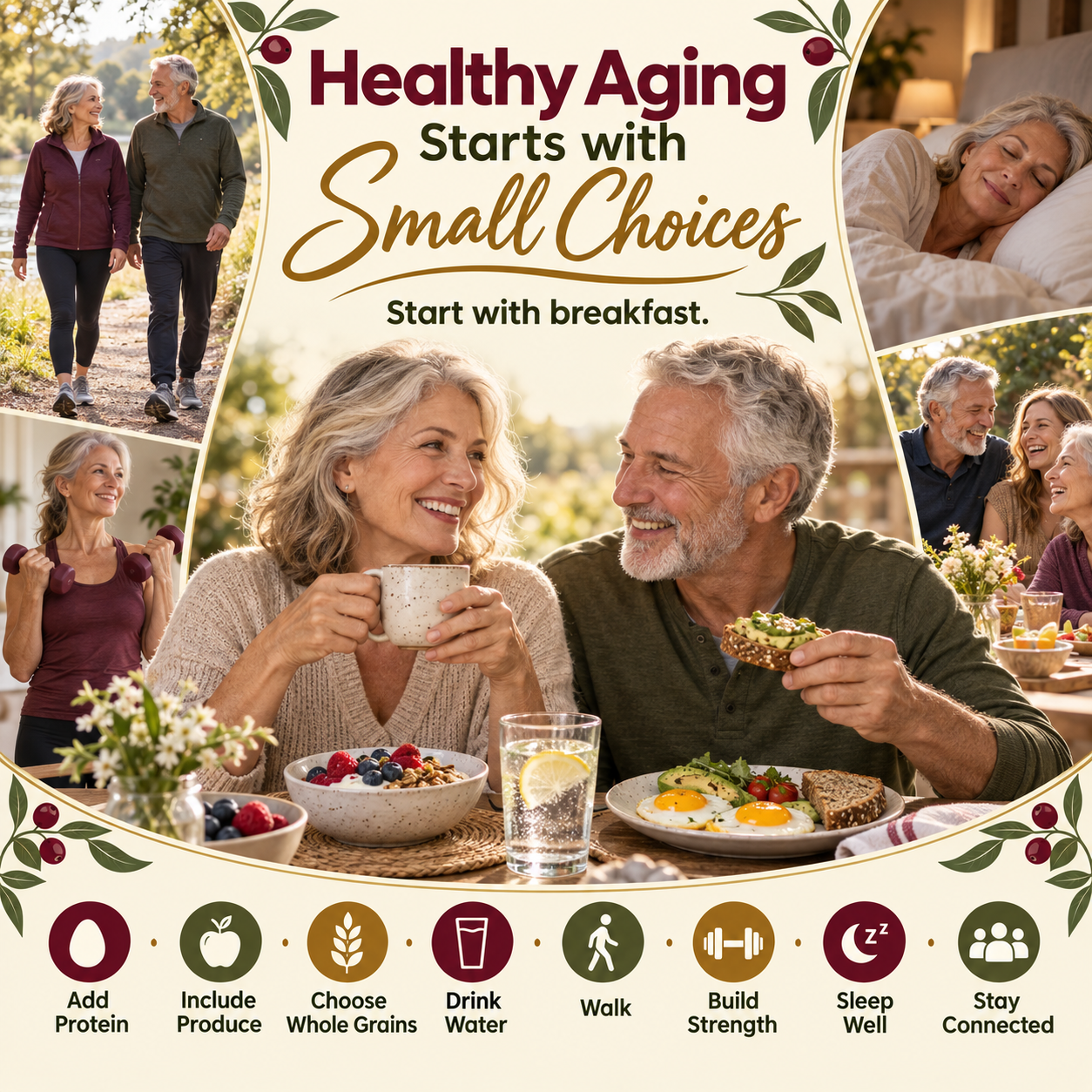
Healthy aging doesn't require a complete lifestyle makeover. Start with breakfast.
Add protein.
Include a fruit or vegetable.
Choose whole grains more often.
Drink water throughout the day.
Take a walk.
Lift some weights.
Get enough sleep.
Stay connected with people you care about.
Then repeat those habits tomorrow.
The National Institute on Aging emphasizes that small lifestyle changes can contribute to living longer and better, including choosing nutritious foods, staying physically active, managing stress, continuing to learn, maintaining social connections, and keeping up with medical care. That's an encouraging message because it means healthy aging isn't something that starts at 65. It starts with the choices we make today.
You don't have to eat perfectly. You don't have to follow the latest diet. You don't need a cabinet full of supplements. You simply need to build a pattern of eating and living that consistently gives your body the raw materials it needs to stay strong, nourished, and capable.
Healthy aging isn't about trying to stop the clock. It's about making the years ahead healthier, stronger, and more enjoyable.
Resources
National Institute on Aging (NIA). Healthy Eating, Nutrition, and Diet. Guidance on nutrient-dense foods, food groups, meal planning, and healthy eating as we age.
National Institute on Aging (NIA). How Much Should I Eat? Quantity and Quality. Information on calorie needs, nutrient density, portion sizes, and making healthier food choices as we age.
National Institute on Aging (NIA). Make Smart Food Choices for Healthy Aging. Practical recommendations for choosing nutrient-dense foods and limiting foods high in added sugars, sodium, and saturated fat.
National Institute on Aging (NIA). Dietary Supplements for Older Adults. Information about nutrients including vitamin B12, vitamin D, calcium, and vitamin B6, and considerations for supplementation.
