

The Power of Plants
There is something remarkable about plants. They grow from the ground, reach toward the sun, and quietly provide many of the nutrients our bodies need to function, repair, and thrive. Yet in a modern food environment filled with convenience foods, large portions, and highly processed choices, many of us have gradually moved plants from the center of our meals to the side of the plate.
A little salad here. A few vegetables with dinner. Maybe a piece of fruit during the day. But what if we looked at plants differently?
Instead of thinking of vegetables, fruits, beans, whole grains, nuts, and seeds as foods we are simply supposed to “eat more of,” we can think of them as the foundation of a healthy eating pattern. That is where the real power of plants begins. Research consistently supports eating patterns rich in vegetables, fruits, whole grains, beans, legumes, nuts, and seeds. These foods provide fiber, vitamins, minerals, healthy fats, protein, and thousands of naturally occurring plant compounds called phytochemicals. No single plant food provides everything we need, which is why variety matters so much.
The goal isn't to find one magical vegetable or one “superfood.” The goal is to create a colorful, diverse diet that gives your body a wide range of nutrients every day.
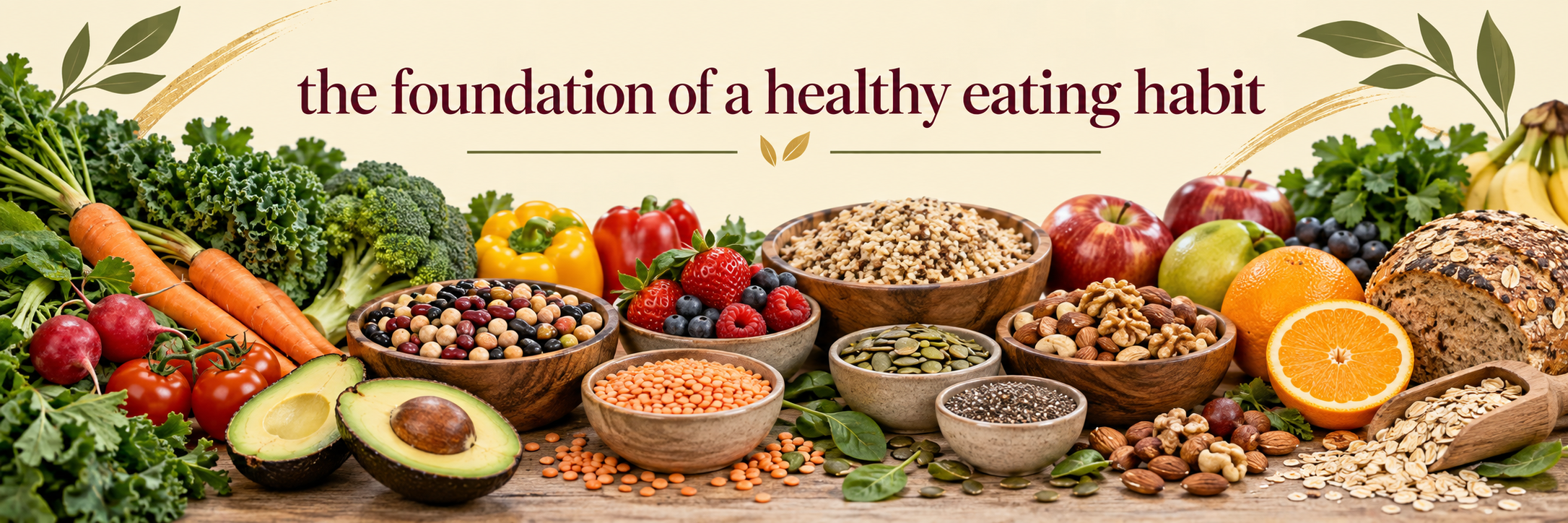
Plants Are More Than Vitamins and Minerals
When people think about vegetables and fruits, they often think about vitamins and minerals first. Carrots bring beta-carotene. Citrus fruits provide vitamin C. Leafy greens contribute folate and vitamin K. Beans provide folate, iron, magnesium, protein, and fiber. Those nutrients are important, but they are only part of the story. Plants contain thousands of naturally occurring compounds that interact with the body in complex ways. These include polyphenols, carotenoids, flavonoids, and other phytochemicals. Different plants contain different combinations of these compounds, which is one reason nutrition experts encourage variety rather than relying on a small number of foods.
Think about the colors on your plate.
Deep green spinach and kale. Bright orange carrots and sweet potatoes. Red tomatoes and peppers. Purple cabbage and berries. Yellow squash and corn. Blueberries, blackberries, and other deeply colored fruits. That variety isn't just visually appealing. It represents a variety of naturally occurring compounds and nutrients. Harvard's Nutrition Source emphasizes both the quantity and variety of fruits and vegetables because no single fruit or vegetable provides everything the body needs.
Plants Can Help Build a Stronger Plate
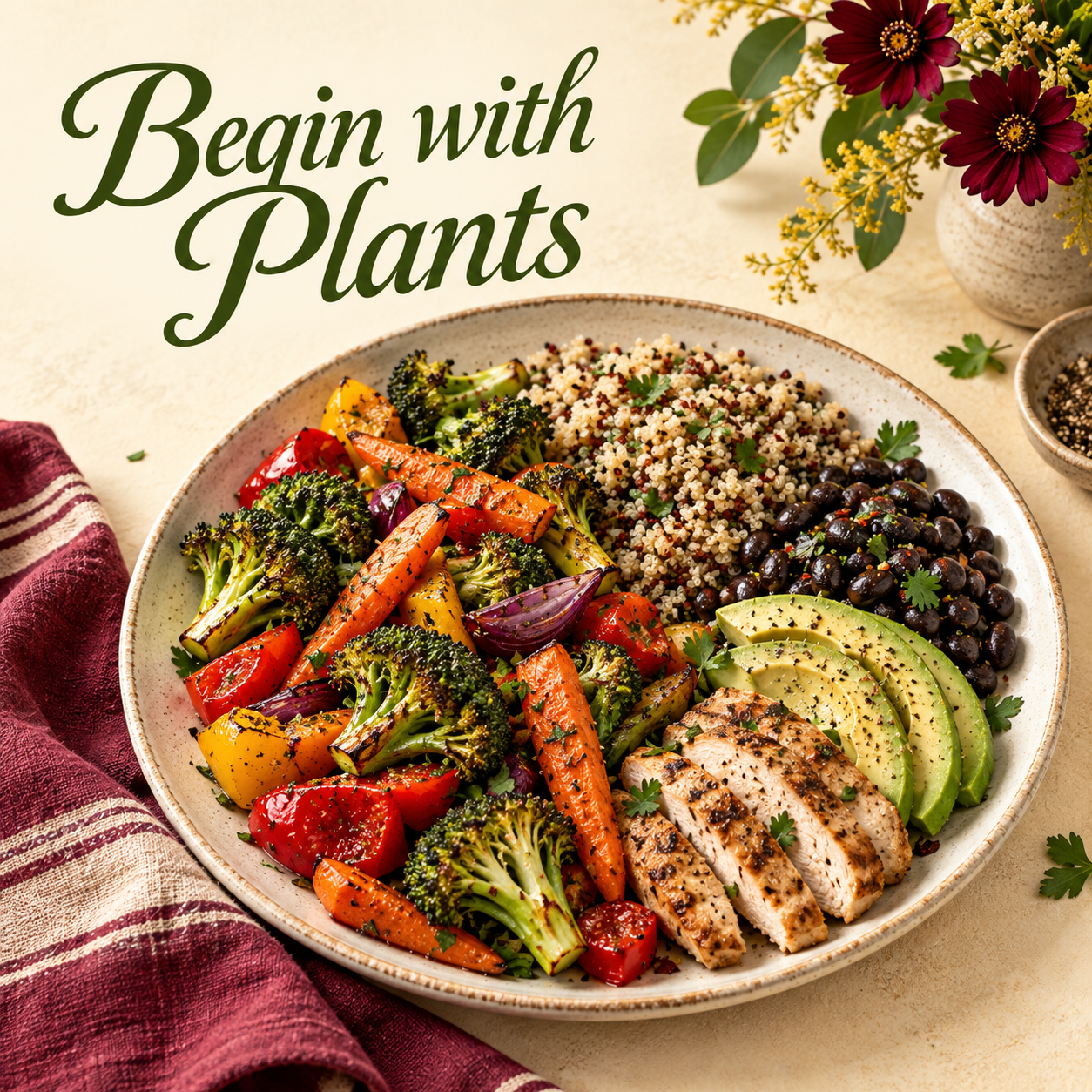
One of the simplest ways to improve the quality of your diet is to change the proportions of your meals. Instead of making meat, refined grains, or heavily processed foods the centerpiece of every meal, begin with plants. Imagine a dinner plate with roasted vegetables, quinoa, black beans, avocado, and grilled chicken. The chicken is still there, but it is no longer carrying the entire nutritional responsibility of the meal. The vegetables provide color, volume, vitamins, minerals, and phytochemicals. The quinoa provides a whole-grain carbohydrate and some protein. The beans contribute protein and fiber. The avocado contributes healthy unsaturated fats. The chicken provides additional protein and important nutrients.
Suddenly, the meal becomes more than the sum of its individual ingredients.
This is what plant-forward eating is really about. It does not necessarily mean becoming vegetarian or vegan. It means making plant foods a larger and more consistent part of your overall eating pattern. The American Heart Association describes plant-forward eating as an approach centered around foods such as vegetables, fruits, whole grains, beans, legumes, nuts, and seeds while emphasizing that plant-based does not automatically mean healthy. Highly processed foods can still be plant-based, so food quality matters.
Fiber: One of the Great Benefits of Eating Plants
One of the most important reasons to eat more plants is fiber. Fiber is found naturally in foods such as vegetables, fruits, whole grains, beans, lentils, nuts, and seeds. Unlike many nutrients, fiber passes through the digestive system without being completely broken down and absorbed.That may sound simple, but fiber plays an important role in digestive health, fullness, blood sugar regulation, cholesterol metabolism, and the health of the gut microbiome. Different types of fiber behave differently in the body. Some fibers absorb water and slow digestion, while others add bulk and help move material through the digestive tract. Fiber can also interact with the trillions of microorganisms living in our gut.
NIH research has highlighted that different types of fiber can have different effects and that the benefits of fiber depend partly on the type and amount consumed as well as individual factors. The important takeaway isn't that you need to memorize the different types of fiber. It's much simpler:
Eat more whole plant foods.
An apple instead of apple-flavored fruit snacks. Oatmeal instead of a sugary breakfast pastry. Beans instead of another serving of refined starch. Brown rice or quinoa instead of refined grains. Nuts and seeds instead of highly processed snack foods. Small substitutions can add up.
Don't Forget the Beans
Beans and legumes deserve special attention because they bring several nutritional benefits together in one inexpensive food. Black beans, kidney beans, chickpeas, lentils, split peas, and other legumes provide protein, fiber, vitamins, minerals, and a variety of plant compounds. They can also make meals more satisfying. A lentil soup can become a complete meal. Black beans can turn tacos into a fiber-rich dinner. Chickpeas can be roasted for a crunchy snack. Lentils can be added to pasta sauce. White beans can be blended into soups for additional creaminess and nutrition.
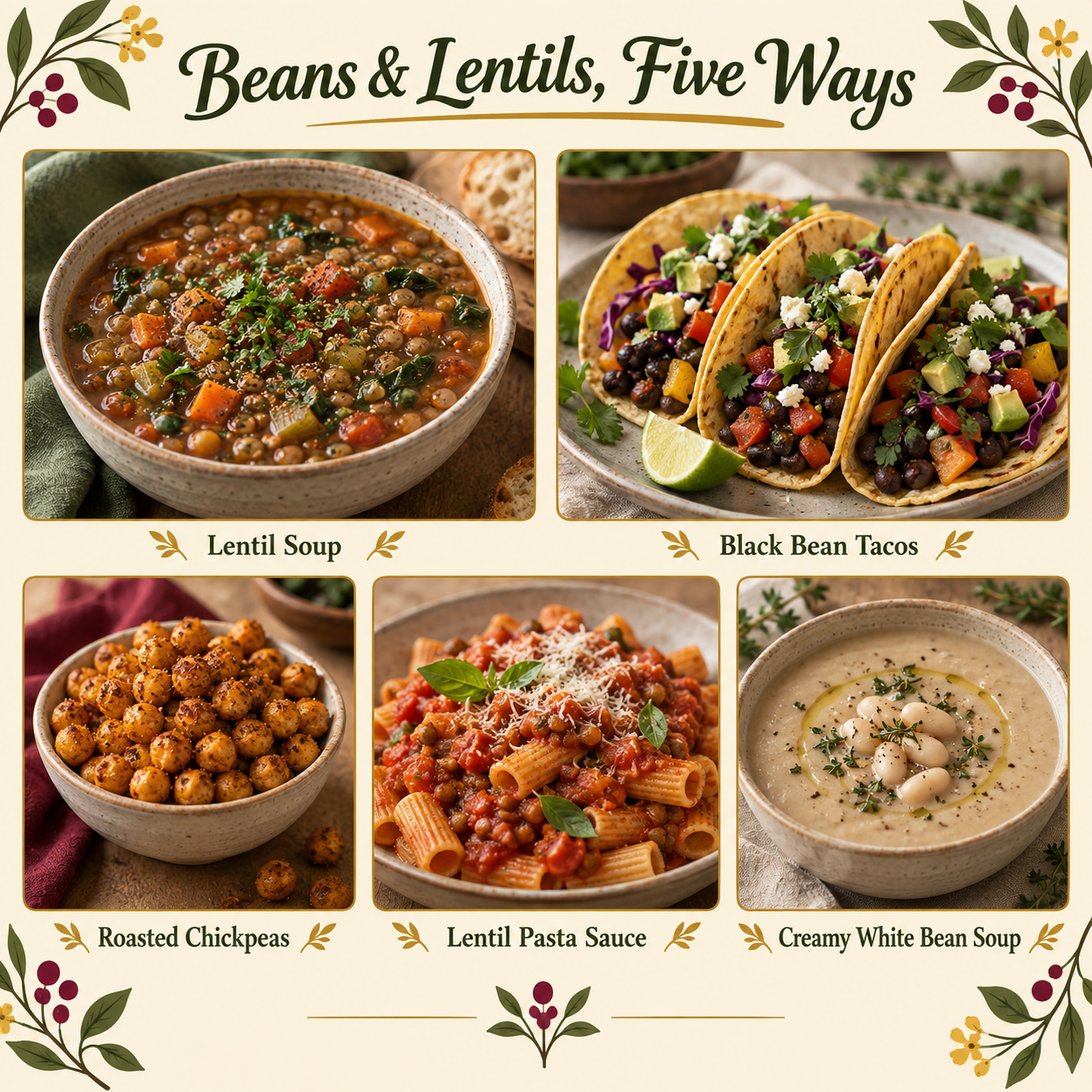
Harvard's Nutrition Source identifies legumes as sources of protein, fiber, folate, iron, phosphorus, and healthy fats, making them an especially useful component of a plant-rich eating pattern. And they don't have to replace meat completely. Try combining them. A bowl with roasted vegetables, quinoa, black beans, and a small portion of grilled chicken can provide a tremendous variety of nutrients and textures.
Whole Grains Belong at the Table
Plants aren't just vegetables and fruits. Whole grains are another important part of a plant-forward diet. Quinoa, oats, barley, brown rice, farro, bulgur, buckwheat, and other intact or minimally processed grains provide carbohydrates for energy along with fiber, vitamins, minerals, and other plant compounds. Whole grains contain the bran, germ, and endosperm of the grain. Refining removes the bran and germ, which also removes many of the naturally occurring nutrients and phytochemicals found in the original grain.
That doesn't mean you can never eat white rice, pasta, or bread. It simply means that when you have a choice, whole or minimally processed grains are often a more nutrient-dense foundation for your meals. Quinoa is a great example. It cooks relatively quickly, works hot or cold, and can be paired with vegetables, beans, herbs, nuts, seeds, eggs, seafood, poultry, or lean meats.
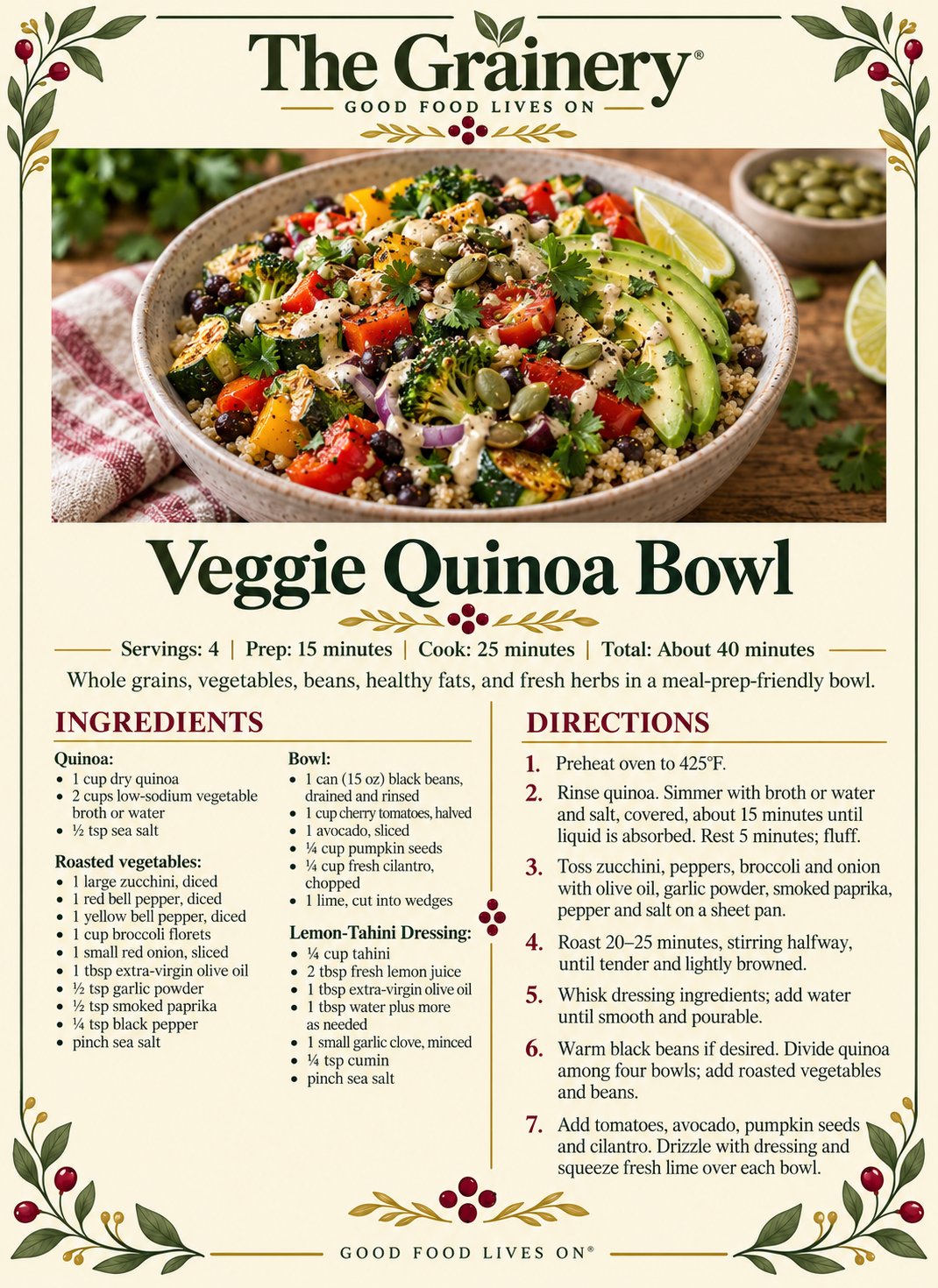
That's why it makes such a great base for the recipe we're sharing this week.
Plants and Healthy Fats
Plant foods can also provide healthy fats. Avocados, walnuts, almonds, chia seeds, flaxseeds, pumpkin seeds, and olive oil are examples of plant foods that can contribute unsaturated fats to the diet. These foods also bring additional nutrients. A handful of walnuts isn't simply “fat.” It also provides protein, fiber, minerals, and plant compounds. Chia seeds provide fiber and healthy fats. Avocado contributes fiber along with monounsaturated fat. Extra-virgin olive oil can provide monounsaturated fat and naturally occurring plant compounds.
This is another reason to think about foods as packages rather than isolated nutrients. A food doesn't have to be perfect to be valuable. It simply needs to contribute something useful to the overall pattern.
What About Protein?
One common concern about eating more plants is protein. Fortunately, protein is found throughout the plant kingdom. Beans, lentils, peas, soy foods, nuts, seeds, and whole grains can all contribute meaningful amounts of protein. Combining different foods throughout the day makes it easier to meet protein needs.
For someone who is physically active, however, simply “eating plants” isn't enough. Total protein intake and overall dietary intake still matter. A plant-forward meal can easily include multiple protein sources. Consider a quinoa bowl with black beans, pumpkin seeds, and Greek yogurt-based dressing. Or oatmeal with milk, chia seeds, walnuts, and berries. Or a lentil and vegetable soup served with whole-grain bread. Plants can absolutely participate in a high-protein diet.
The key is to be intentional.
Start With Addition, Not Restriction
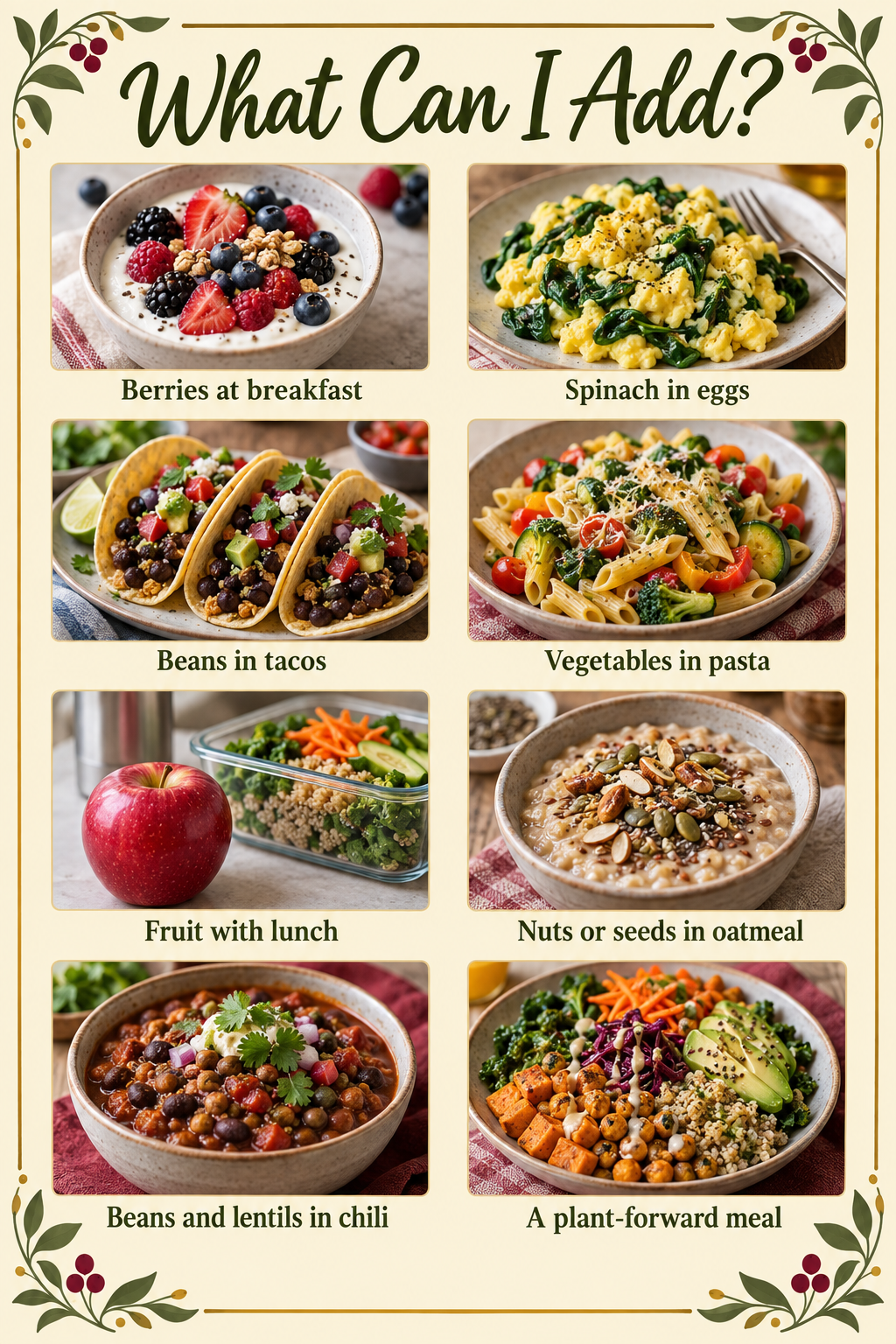
Perhaps the most practical way to embrace the power of plants is to stop thinking primarily about what you need to eliminate. Instead, ask: “What can I add?”
These changes don't require a perfect diet. They require consistency. Harvard's Healthy Eating Plate recommends making vegetables and fruits a substantial portion of the meal, choosing whole grains, and incorporating healthy protein sources. The American Heart Association similarly encourages eating patterns built around vegetables, fruits, whole grains, beans, legumes, nuts, and other nutrient-dense foods.
The Power of Plants Is Really the Power of Variety
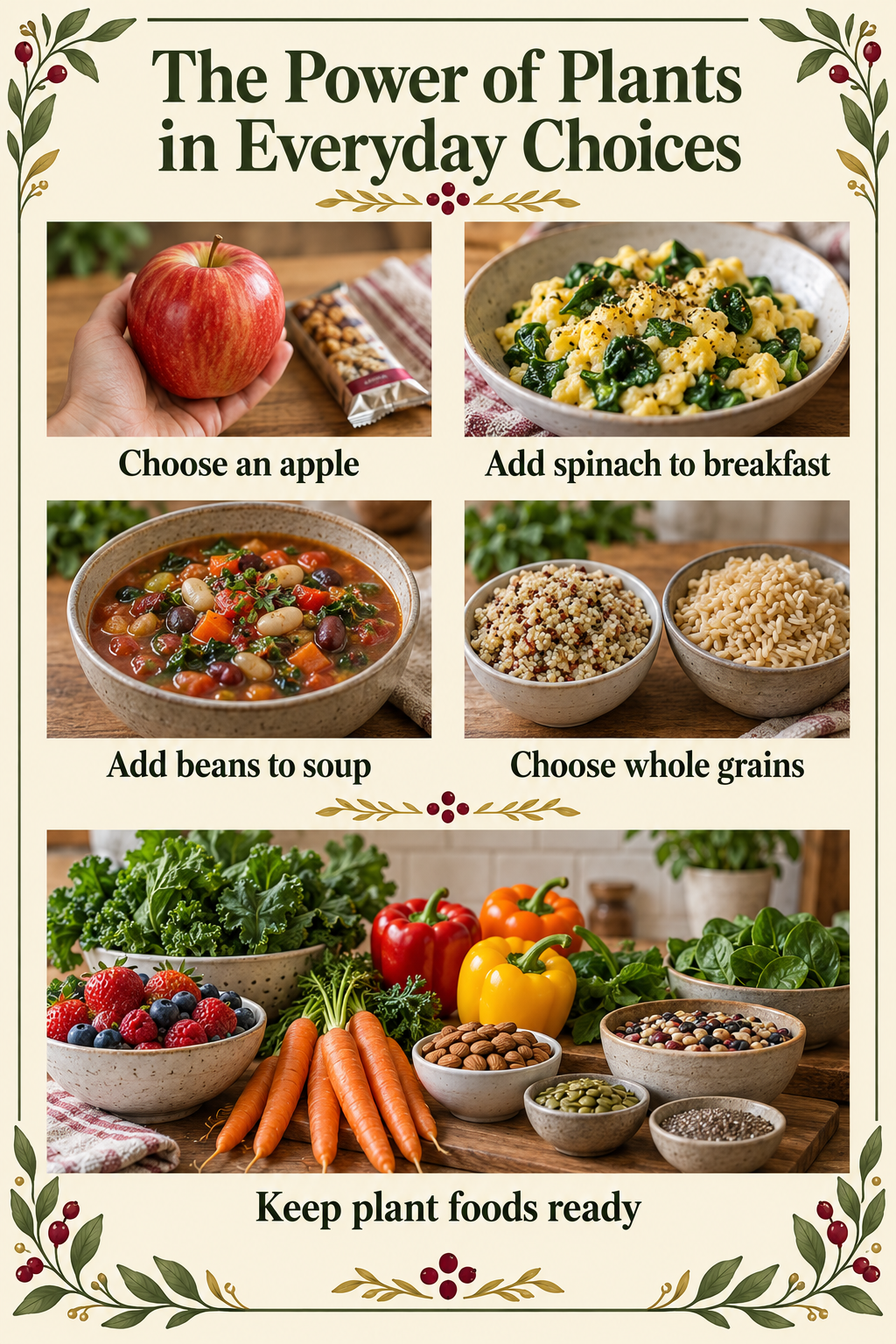
There is no single perfect food. There is no magic vegetable. There is no berry that can replace a balanced diet. The power comes from variety and consistency. It comes from eating foods that grew from the earth in as many forms, colors, and combinations as possible. It comes from choosing an apple instead of a packaged snack sometimes. It comes from adding spinach to breakfast. It comes from putting beans into your soup. It comes from choosing quinoa or brown rice more often. It comes from keeping berries, carrots, peppers, leafy greens, nuts, seeds, and beans available in your kitchen.
And it comes from understanding that healthy eating doesn't have to be complicated.
Sometimes the most powerful changes are also the simplest. Eat more plants. Eat a greater variety of plants. Build meals around whole foods. And make healthy choices easier by keeping those foods within reach.
Resources
Harvard T.H. Chan School of Public Health — The Nutrition Source
Vegetables and Fruits
Healthy Eating Plate
What Should I Eat?
Whole Grains
Legumes and Pulses
Consume Less Meat, Enjoy More Variety
Healthy Eating Pyramid
Recipes and Healthy Kitchen Guidance
American Heart Association
How Does Plant-Forward Eating Benefit Your Health?
Vegetarian, Vegan and Meatless Meals
Life's Essential 8 — How to Eat Better
Your Guide to Healthy Eating Habits That Stick
Healthy Food Facts: Your Guide to Balanced Eating
5 Must-Have Foods to Always Have in Your Pantry
National Institutes of Health
NIH Research Matters: Health Benefits of Dietary Fibers Vary
National Center for Complementary and Integrative Health and other NIH nutrition resources
Healthy Habits
Shop the produce department for a variety of colorful fruits and vegetables.
Look for whole grains such as quinoa, oats, brown rice, and other minimally processed grains.
Keep beans, lentils, nuts, and seeds stocked for convenient plant-based protein and fiber.
Choose seasonal and locally sourced produce whenever possible.
Build meals around whole foods rather than relying primarily on highly processed products.
