Healthy Fats: Why Your Body Needs Them
For years, many people believed that eating fat was something to avoid. Today, nutrition research paints a much different picture. While it's still important to limit certain types of fats, healthy fats are an essential part of a balanced diet and play an important role in supporting overall health.
The key isn't to avoid fat—it's to choose the right kinds of fat.
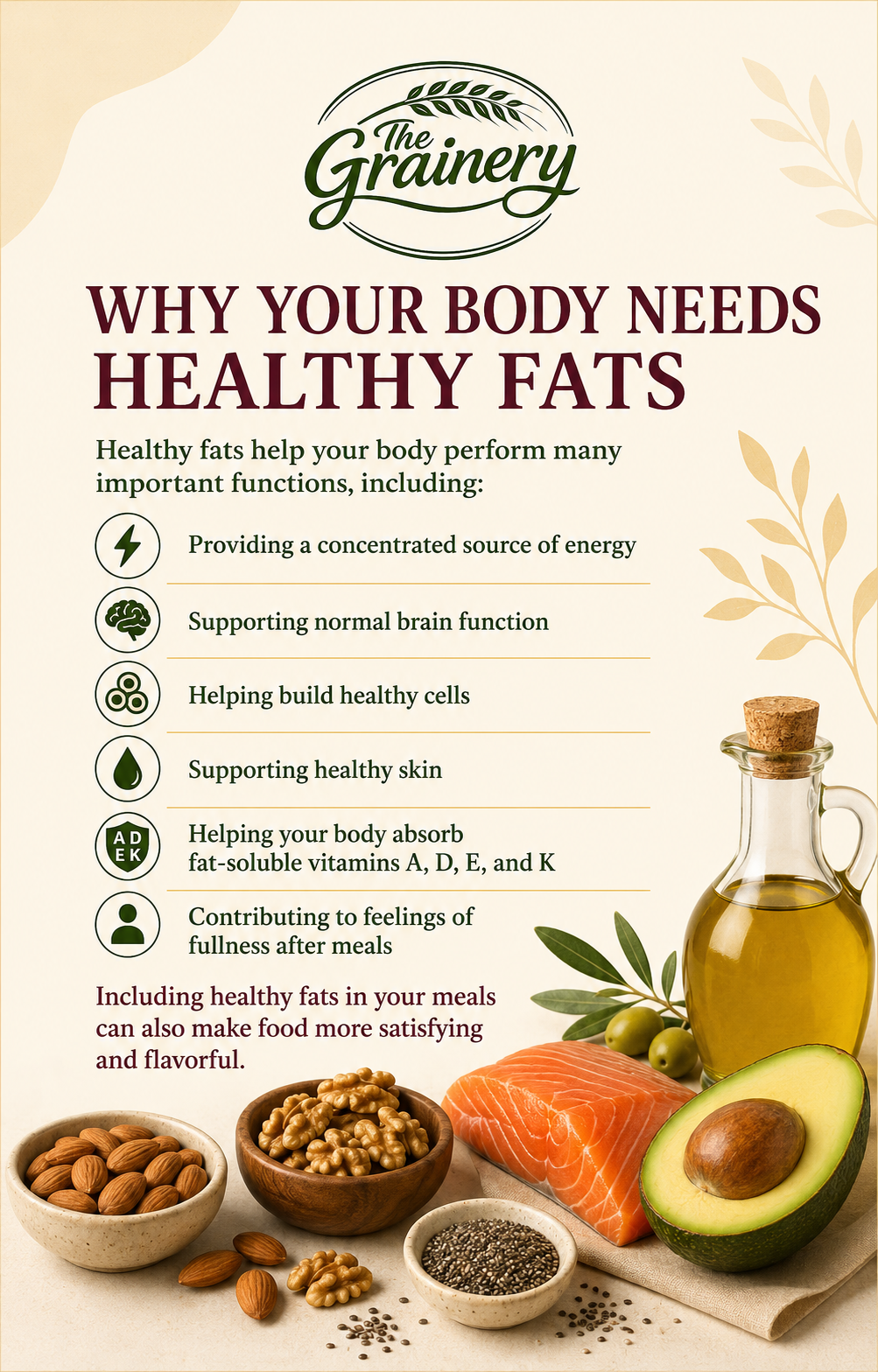
Why Does Your Body Need Healthy Fats?
The Difference Between Healthy and Less Healthy Fats
Not all fats are created equal.
Choose More Often
These fats can be part of a heart-healthy eating pattern:
Avocados
Extra virgin olive oil
Nuts such as almonds, walnuts, and pistachios
Seeds including chia, flax, pumpkin, and sunflower
Natural nut butters
Fatty fish like salmon, sardines, trout, and mackerel
Olives
These foods also provide vitamins, minerals, fiber, and other beneficial nutrients.
Limit More Often
Try to reduce foods that are high in:
Trans fats
Highly processed fried foods
Packaged baked goods made with partially hydrogenated oils
Foods high in saturated fat when consumed in excess
Reading nutrition labels and choosing minimally processed foods whenever possible can help you make informed choices.
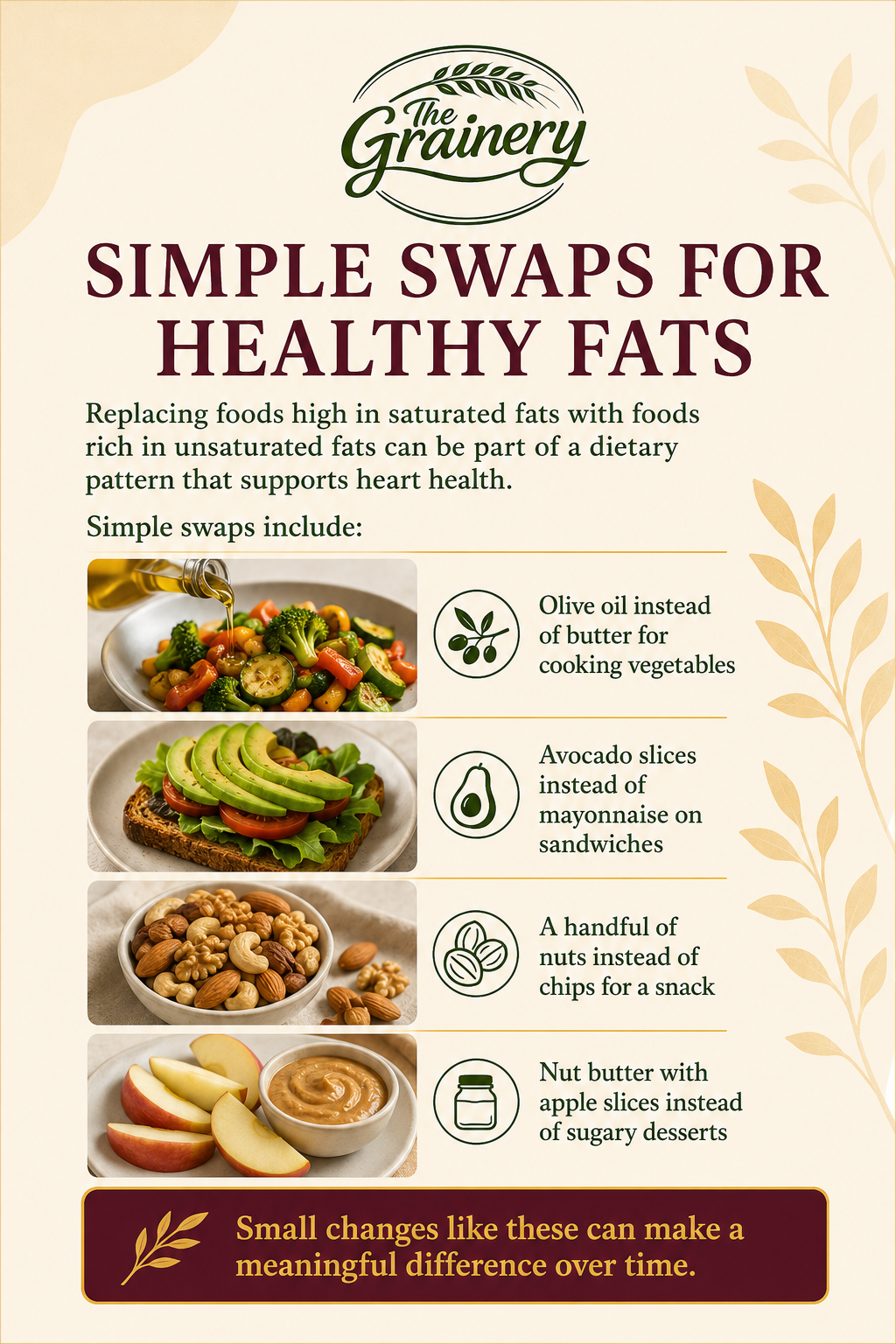
Healthy Fats and Heart Health
Don't Forget Omega-3 Fats
Omega-3 fatty acids are a type of healthy fat found in foods such as:
Salmon
Sardines
Herring
Mackerel
Chia seeds
Flaxseed
Walnuts
If you don't eat fish regularly, you may want to discuss an omega-3 supplement with your healthcare provider or one of our knowledgeable team members.
Healthy Fats Work Best with a Balanced Lifestyle
Healthy fats are just one part of the wellness picture.
For the greatest benefit:
Eat a variety of fruits and vegetables.
Choose whole grains more often.
Stay physically active.
Drink plenty of water.
Get enough sleep.
Manage stress.
Enjoy healthy fats in appropriate portions as part of an overall balanced diet.
It's the combination of healthy habits—not one single food—that supports long-term wellness.