Understanding Electrolytes

When most people hear the word “electrolytes,” they probably think of sports drinks, long workouts, or something they reach for after sweating heavily. Electrolytes have become a major part of the health and fitness conversation, and there are now countless powders, tablets, beverages, and supplements promising better hydration and improved performance. While electrolytes can certainly play an important role in hydration, the subject is more interesting and more complicated than simply drinking a brightly colored sports drink whenever you exercise.
Electrolytes are minerals that carry an electrical charge when dissolved in body fluids. The most familiar electrolytes include sodium, potassium, chloride, magnesium, calcium, and phosphate. These minerals help regulate fluid balance and participate in important processes involving nerves, muscles, heart function, and cellular activity. Sodium and potassium are particularly important because they help maintain fluid and blood volume and contribute to normal nerve and muscle function.
The body works constantly to keep electrolyte concentrations within a relatively narrow range. Your kidneys, hormones, digestive system, and thirst mechanisms all participate in this process. Because the body has such sophisticated systems for maintaining electrolyte balance, most healthy people who eat a varied diet and drink adequate fluids do not need to supplement electrolytes simply because they exercised for a short period of time.That distinction is important because electrolyte products are often marketed as if everyone needs them all the time.
What Exactly Are Electrolytes?
At their simplest, electrolytes are minerals that help your body conduct electrical activity and regulate fluids. Sodium, potassium, chloride, calcium, and magnesium are among the most important electrolytes involved in normal human physiology, and they are found naturally in many foods and beverages.
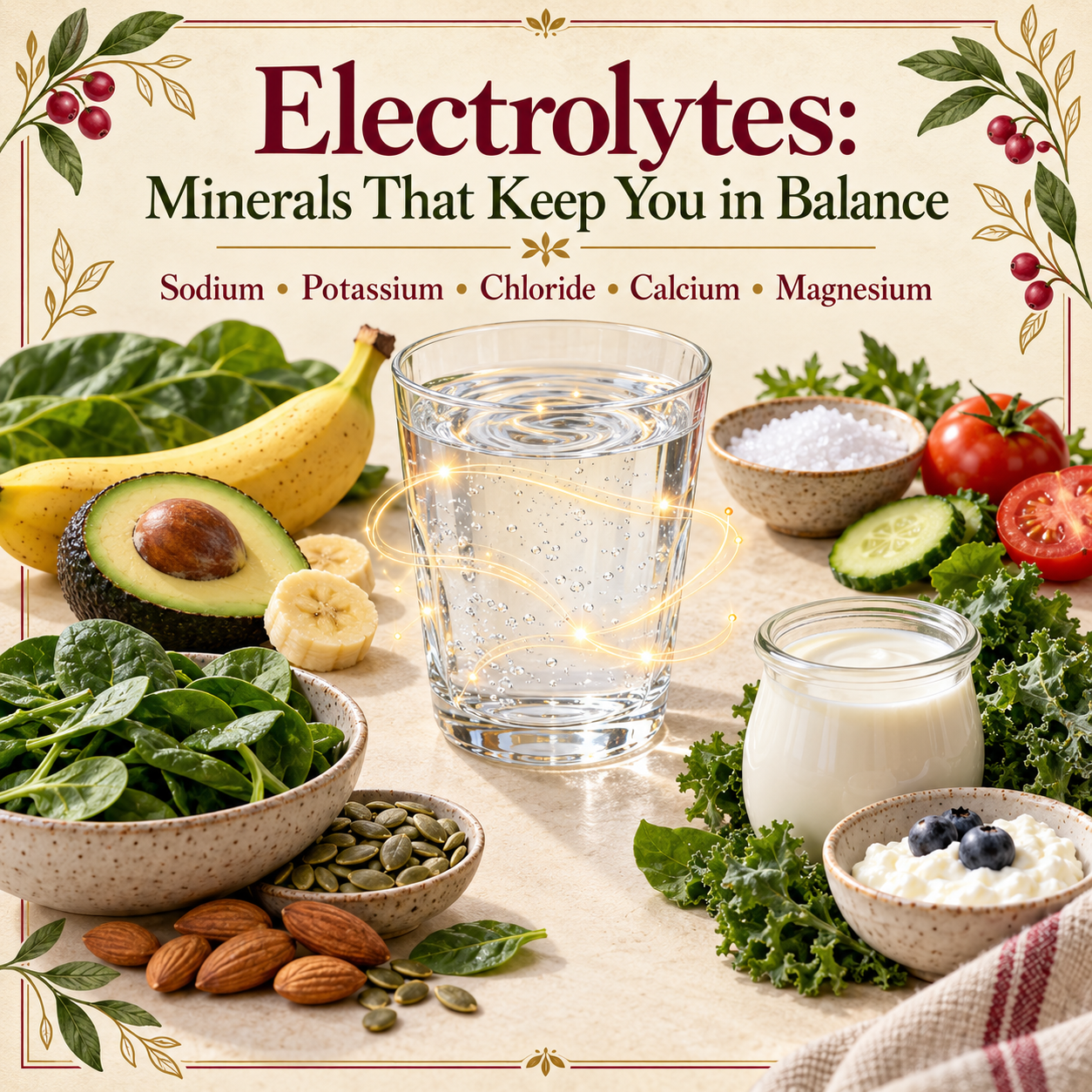
Sodium is especially important for maintaining fluid balance outside cells, while potassium is particularly important inside cells. Together, these minerals help create the electrical gradients necessary for normal nerve signaling and muscle contraction. Calcium is involved in muscle contraction, nerve communication, and bone structure, while magnesium participates in hundreds of biochemical reactions throughout the body.
This means electrolytes are not simply “hydration minerals.” They are involved in many of the basic processes that allow the human body to function.
Food is one of the primary ways we obtain these minerals. Fruits and vegetables can provide potassium and magnesium, dairy products can provide calcium and potassium, nuts and seeds provide magnesium, and sodium is naturally present in foods and is also commonly added during cooking and food processing. For most people, a balanced diet supplies a significant amount of what the body needs.
Why Electrolytes Matter During Exercise
Exercise changes the equation because physical activity increases fluid loss through sweat and respiration. The longer and harder you exercise, and the hotter the environment becomes, the more important fluid and electrolyte replacement can become.
Sweat contains water along with electrolytes, particularly sodium and chloride, although the concentration varies considerably from person to person. Some people are naturally heavy sweaters, while others lose much less fluid during the same activity. Sweat rates can also change depending on temperature, humidity, clothing, exercise intensity, fitness level, and how acclimated someone is to the heat.This is why there is no single hydration strategy that works perfectly for everyone.
For someone taking a 30-minute walk in mild weather, plain water and normal meals are generally more than adequate. For someone completing a long hike in the summer heat, playing several hours of outdoor sports, working physically outside all day, or completing a long endurance workout, replacing both fluids and electrolytes may become much more important.
The American College of Sports Medicine notes that most recreational exercisers training for less than 60 to 90 minutes in normal weather conditions are unlikely to become significantly depleted of electrolytes. However, people exercising for longer periods, training in the heat, or sweating heavily may have greater electrolyte replacement needs.
Understanding this difference can help us use electrolyte products appropriately rather than assuming more is always better.
Sodium: The Electrolyte We Lose the Most Through Sweat
When discussing exercise hydration, sodium deserves particular attention. Sodium helps regulate fluid balance, blood volume, and nerve and muscle function, and it is one of the primary electrolytes lost through sweat.
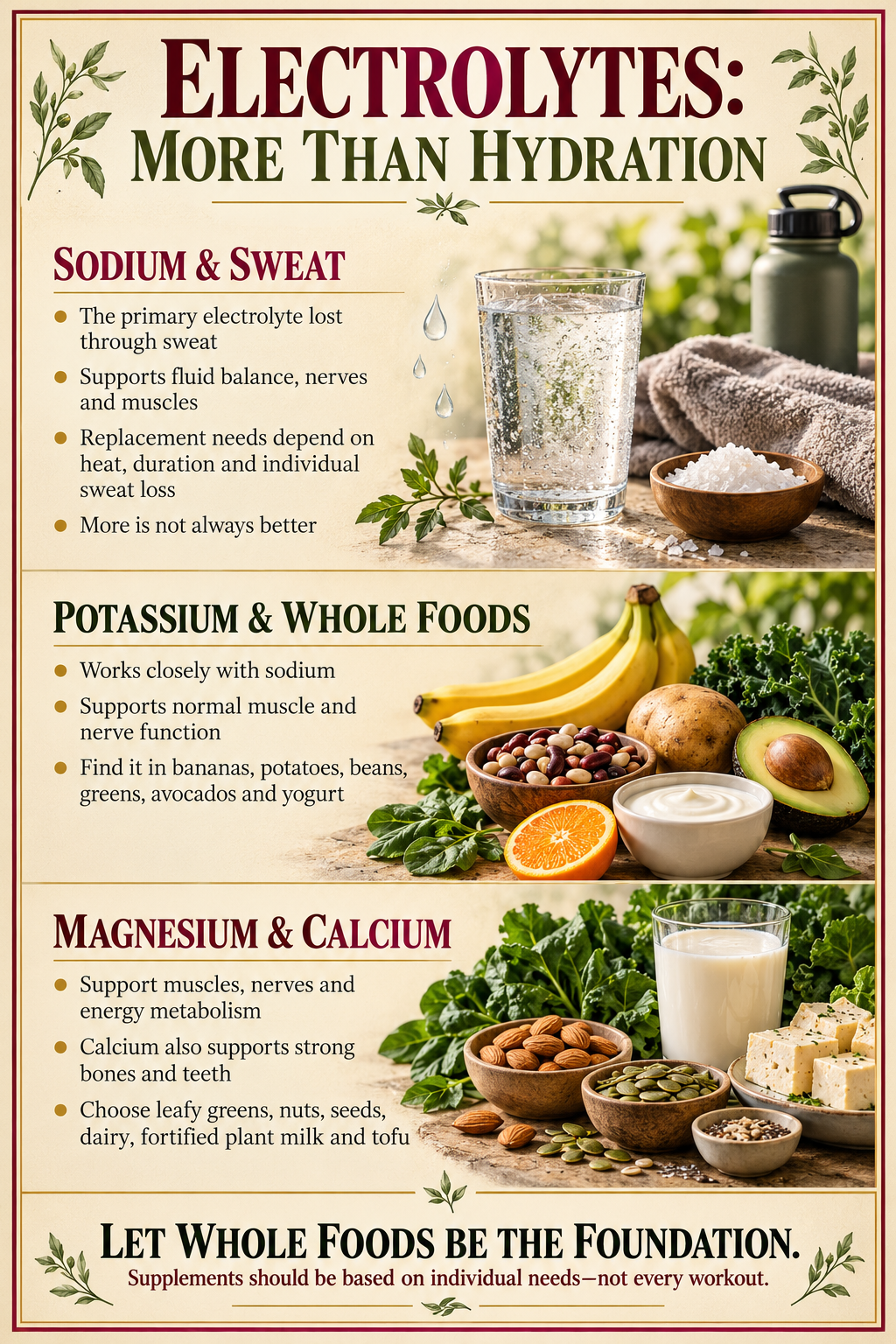
The amount of sodium lost through sweat can vary tremendously between individuals. This is one reason some athletes notice salt stains on their clothing after long workouts while others do not. Sweat concentration can also change as the body adapts to repeated exposure to heat and exercise.
Replacing sodium becomes particularly relevant during prolonged sweating. An endurance athlete exercising for several hours in hot weather has very different hydration needs from someone doing a 45-minute strength workout in an air-conditioned gym.
This does not mean everyone should dramatically increase sodium intake. Sodium is essential, but excessive sodium intake can contribute to high blood pressure in susceptible individuals, so electrolyte replacement should be based on the situation rather than treated as a universal health recommendation.
Potassium Plays an Important Role Too
Potassium is another major electrolyte and is found naturally in many whole foods. Bananas are probably the food most commonly associated with potassium, but potatoes, beans, lentils, leafy greens, avocados, winter squash, yogurt, citrus fruits, and many other foods also provide potassium.
Potassium helps support normal muscle and nerve function and contributes to maintaining fluid balance. It works closely with sodium, which is one reason a balanced diet matters more than focusing on a single mineral.
For most people, potassium is best obtained from food rather than from high-dose supplements. A diet rich in vegetables, fruits, beans, whole grains, nuts, seeds, and other minimally processed foods can provide meaningful amounts of potassium along with fiber and many other nutrients.This is another example of why whole foods should remain the foundation of hydration and nutrition.
Magnesium and Calcium Have Jobs Beyond Hydration
Magnesium and calcium are also electrolytes, but they are often discussed separately because their roles extend far beyond fluid balance. Magnesium participates in hundreds of enzymatic reactions and contributes to normal muscle and nerve function, energy metabolism, and protein synthesis.
Calcium is essential for strong bones and teeth, but it also plays an important role in muscle contraction and nerve signaling. Dairy products, fortified plant milks, leafy greens, tofu made with calcium sulfate, and some canned fish are useful dietary sources.
Although magnesium and calcium are included in many electrolyte products, that does not necessarily mean you need a high-dose supplement of either mineral whenever you exercise. Your overall dietary intake and individual nutritional needs should determine whether supplementation is appropriate.
Do You Need Electrolytes Every Day?
For most healthy people, the answer is no.
Water and a balanced diet are usually enough to maintain normal hydration and electrolyte balance during everyday activities. You do not need an electrolyte drink simply because you went for a short walk, completed a brief workout, or had a normal day at work.
There are circumstances where electrolytes become more useful. Long-duration exercise, intense training, heavy sweating, hot and humid weather, prolonged outdoor work, endurance events, and repeated training sessions can all increase the importance of replacing fluids and electrolytes.
The Centers for Disease Control and Prevention emphasizes that people exercising in hot weather are at greater risk for dehydration and heat-related illness and should increase attention to hydration and environmental conditions.The key is to match your strategy to your activity.
What About Electrolyte Powders and Drinks?
Electrolyte products can be convenient, especially when you are exercising for long periods or sweating heavily. A well-formulated product can provide fluids along with sodium and other electrolytes without requiring you to carry salty foods or prepare a complete meal during an activity.However, not every electrolyte product is created equal.
Some products contain substantial amounts of added sugar, while others contain very little sodium. Some contain several electrolytes but only tiny amounts of each. Others are formulated specifically for endurance athletes and provide substantially more sodium.
When choosing a product, look at the Supplement Facts panel rather than relying only on the marketing on the front of the package. Pay particular attention to the amount of sodium per serving, the amount of potassium and magnesium, the serving size, and whether the product contains added sugar or carbohydrates.Your needs should determine what you choose.
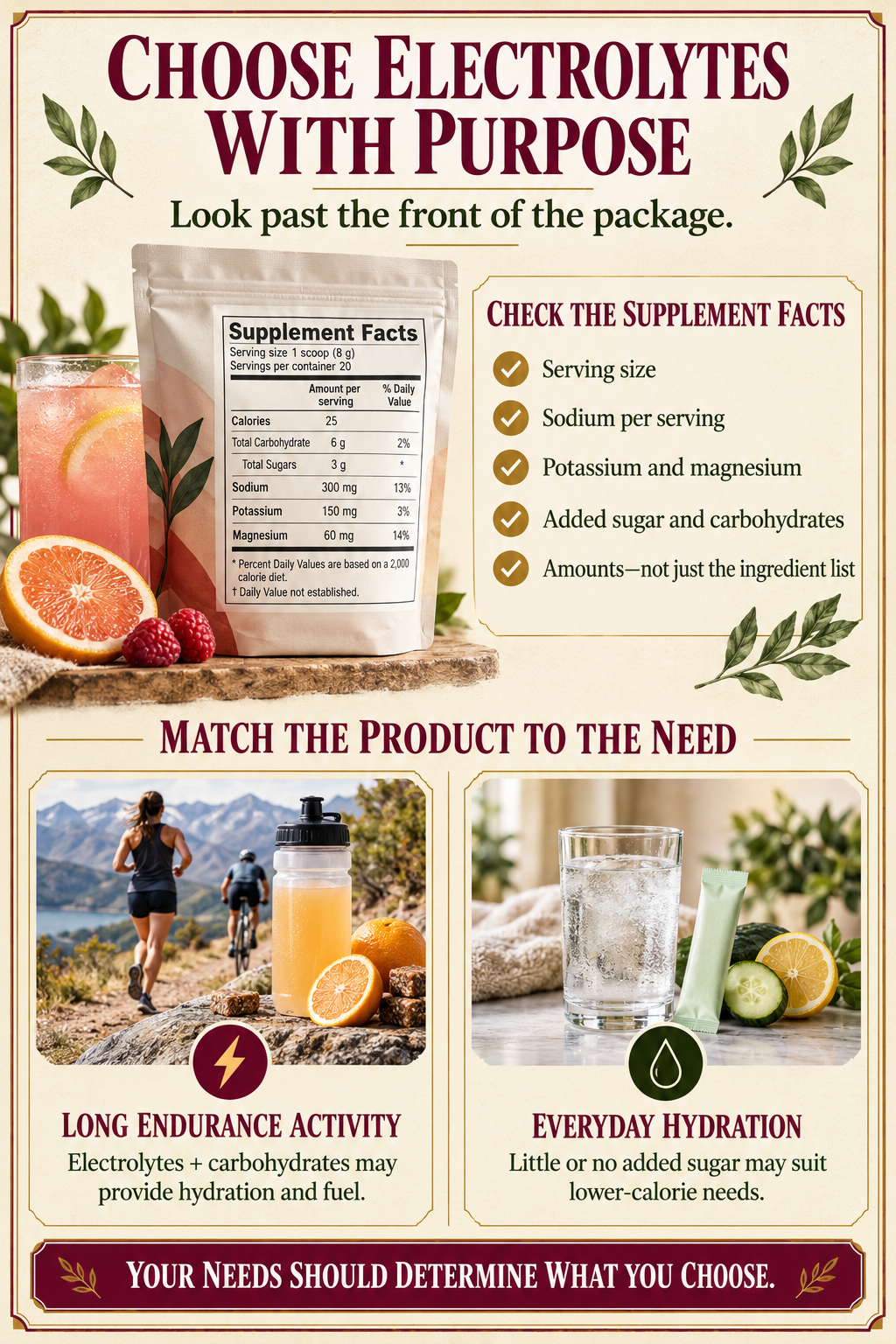
Someone doing a long endurance event may benefit from a product containing both electrolytes and carbohydrates because they need hydration and fuel. Someone simply looking for a low-calorie hydration option may prefer a product with electrolytes and little or no added sugar.
Hydration Is More Than Just Drinking Water
It can be tempting to think that hydration simply means drinking as much water as possible. However, hydration is about maintaining appropriate fluid balance rather than consuming the maximum amount of water you can tolerate.
During prolonged exercise, drinking excessive amounts of plain water without replacing sodium can contribute to dangerously low blood sodium levels, particularly when large amounts of fluid are consumed over several hours. This is one reason hydration strategies for endurance athletes need to consider both fluid and electrolyte intake.
At the same time, forcing yourself to consume large quantities of electrolyte beverages when you are not losing significant amounts of fluid is unnecessary.The goal is balance.Drink regularly, pay attention to your thirst and activity conditions, and increase your attention to electrolytes when the circumstances call for it.
Food Can Be Part of Your Electrolyte Strategy
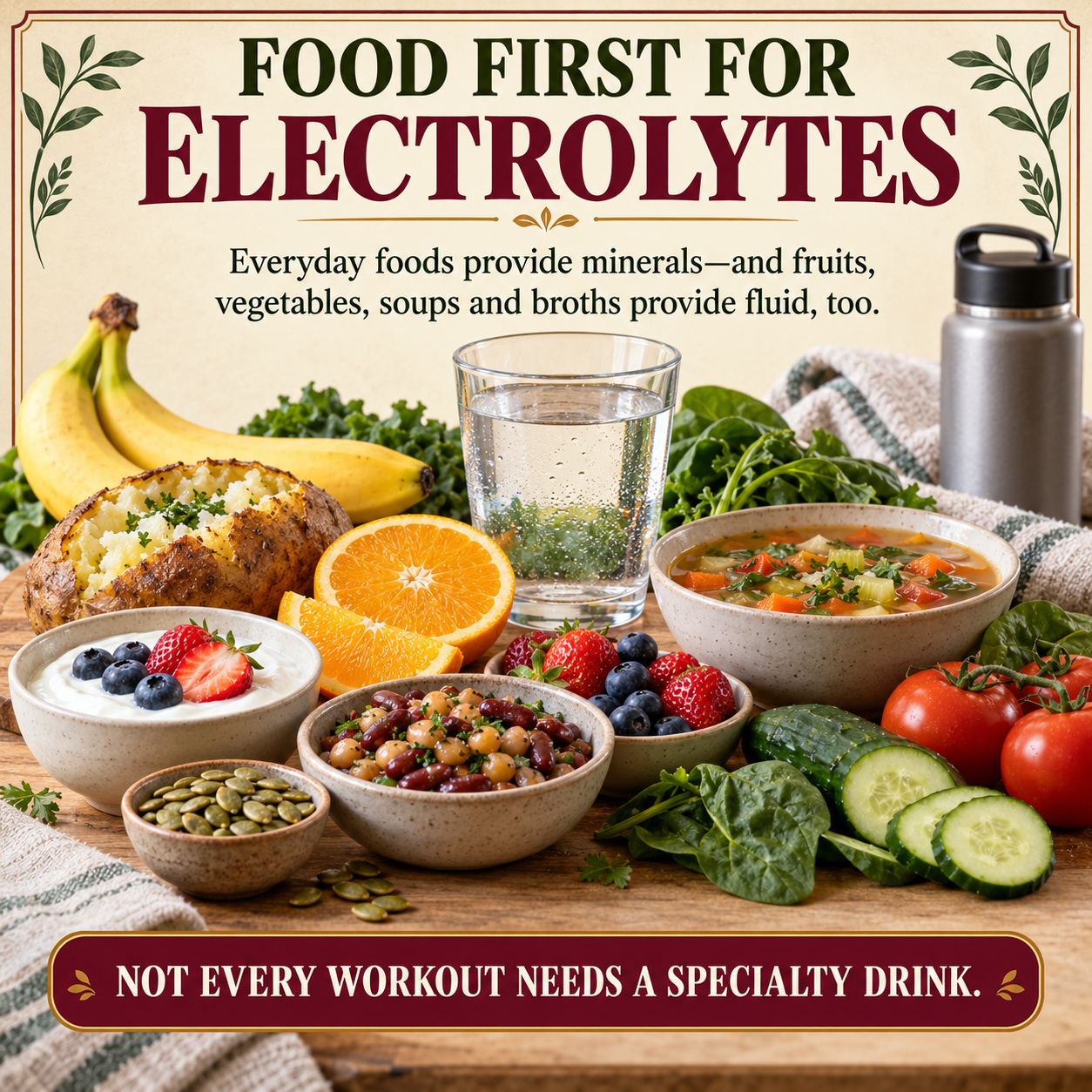
One of the most overlooked facts about electrolytes is that you can get many of them from ordinary foods. A banana can provide potassium. Yogurt can provide potassium and calcium. Pumpkin seeds can provide magnesium. Potatoes can provide potassium. Beans can provide potassium and magnesium. Broths and soups can provide sodium and fluid. Fruits and vegetables contribute both water and minerals.This means you don't necessarily need a specialized beverage after every workout.
A meal containing a lean protein, potatoes or whole grains, vegetables, fruit, and adequate fluids can contribute to recovery while providing a variety of electrolytes and other nutrients.That approach also provides protein, carbohydrates, vitamins, minerals, fiber, and other components that an electrolyte supplement alone cannot provide.
The Bottom Line
Electrolytes are essential minerals that help your body regulate fluids and support normal nerve, muscle, and cellular function. They become particularly important when fluid and mineral losses increase through prolonged exercise, heavy sweating, heat exposure, or extended physical activity.
For everyday hydration, however, simplicity usually wins. Water, regular meals, fruits, vegetables, whole grains, beans, nuts, seeds, dairy or fortified alternatives, and other nutrient-dense foods can provide many of the minerals your body needs.Electrolyte supplements can be useful tools, but they are tools rather than necessities for everyone.The best approach is to understand when you actually need them and then choose a product that fits your activity, sweat rate, diet, and individual needs.
Healthy hydration isn't about drinking the most water or taking the most electrolytes. It is about giving your body the fluids and minerals it needs, when it needs them, while allowing your overall diet to do most of the work.