The Truth About Gut Health: Building a Healthy Microbiome
Over the last several years, gut health has become one of the most talked-about topics in nutrition—and for good reason. Scientists continue to discover how important the gut is to our overall health. From digestion and nutrient absorption to immune function and overall well-being, a healthy gut plays a central role in helping your body perform at its best.
At the heart of gut health is something called the gut microbiome—a community of trillions of bacteria, fungi, and other microorganisms that naturally live in your digestive tract. While that may sound surprising, many of these microbes are beneficial and work together to support normal bodily functions.
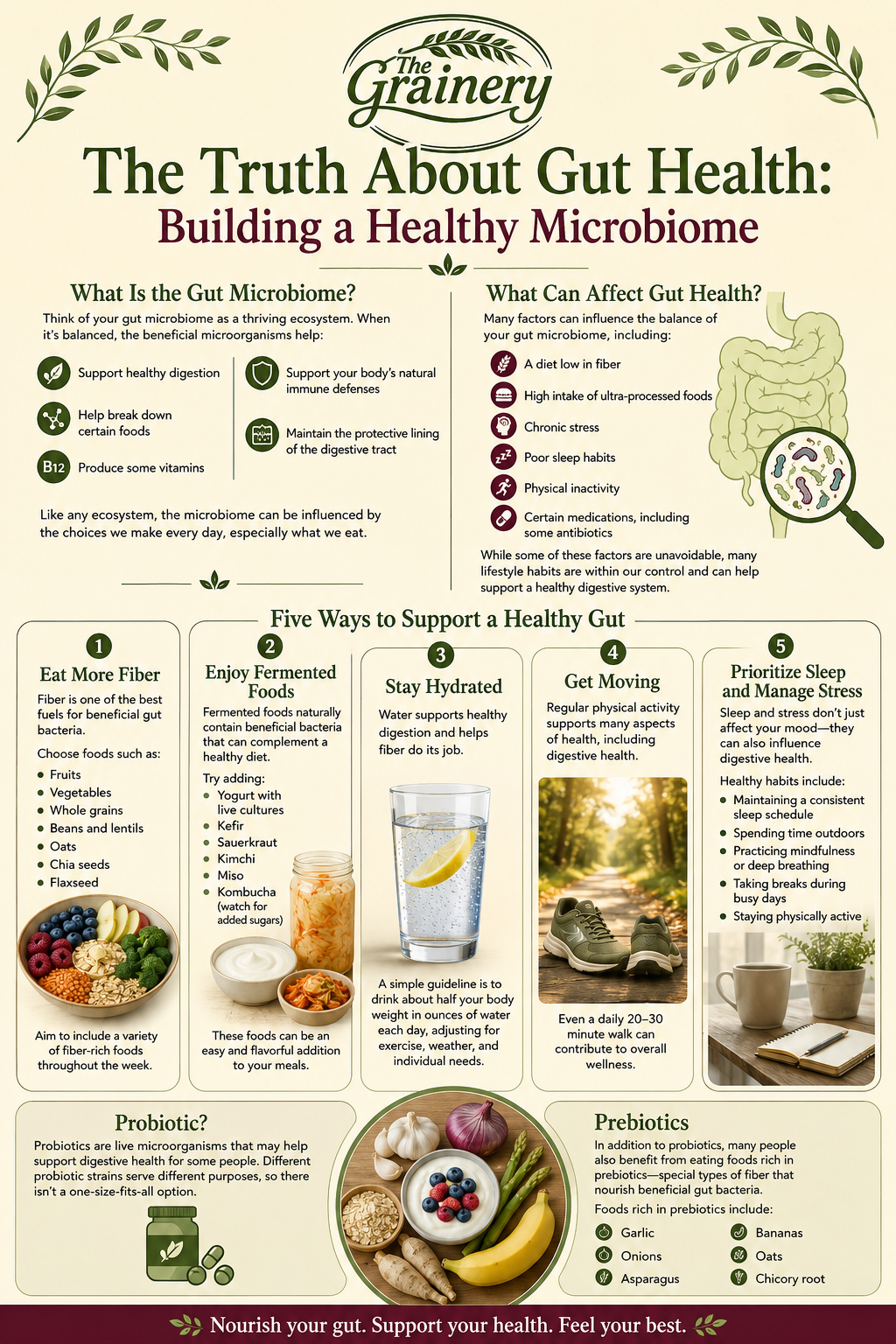
Five Ways to Support a Healthy Gut
1. Eat More Fiber
Fiber is one of the best fuels for beneficial gut bacteria.
Choose foods such as:
● Fruits
● Vegetables
● Whole grains
● Beans and lentils
● Oats
● Chia seeds
● Flaxseed
Aim to include a variety of fiber-rich foods throughout the week.
2. Enjoy Fermented Foods
Fermented foods naturally contain beneficial bacteria that can complement a healthy diet.
Try adding:
● Yogurt with live cultures
● Kefir
● Sauerkraut
● Kimchi
● Miso
● Kombucha (watch for added sugars)
These foods can be an easy and flavorful addition to your meals.
3. Stay Hydrated
Water supports healthy digestion and helps fiber do its job.
A simple guideline is to drink about half your body weight in ounces of water each day, adjusting for exercise, weather, and individual needs.
4. Get Moving
Regular physical activity supports many aspects of health, including digestive health.
Even a daily 20–30 minute walk can contribute to overall wellness.
5. Prioritize Sleep and Manage Stress
Sleep and stress don't just affect your mood—they can also influence digestive health.
Healthy habits include:
● Maintaining a consistent sleep schedule
● Spending time outdoors
● Practicing mindfulness or deep breathing
● Taking breaks during busy days
● Staying physically active
Probiotic?
Probiotics are live microorganisms that may help support digestive health for some people. Different probiotic strains serve different purposes, so there isn't a one-size-fits-all option.
In addition to probiotics, many people also benefit from eating foods rich in prebiotics—special types of fiber that nourish beneficial gut bacteria.
Foods rich in prebiotics include:
● Garlic
● Onions
● Asparagus
● Bananas
● Oats
● Chicory root
Combining probiotic foods with prebiotic-rich foods helps create an environment where beneficial bacteria can thrive.