

Have you ever finished breakfast feeling satisfied, only to find yourself searching for something to eat an hour or two later? Perhaps you have experienced an afternoon when your energy seems to disappear, leaving you reaching for another cup of coffee or something sweet to help you get through the day. While these experiences can have many causes, including sleep, stress, activity levels, and overall nutrition, the amount of added sugar in our diets is worth paying attention to. What surprises many people is that added sugar is not limited to candy, cookies, and desserts. It can also appear in foods we regularly associate with healthy eating.
Throughout my years working as a professional chef and personal trainer, I have come to appreciate how much our everyday food choices influence our health. Working with food from both a culinary and nutritional perspective has reinforced an important lesson: what we eat consistently matters far more than any single meal. I have also learned that many people genuinely want to improve their nutrition but are unsure where to begin. Added sugar is a perfect example because it is something we encounter regularly, often without realizing how much we are consuming.
The goal of understanding added sugar is not to eliminate sweetness from our lives or make people feel guilty about enjoying their favorite foods. Instead, it is to recognize where added sugar appears, understand how excessive consumption can affect health, and learn practical ways to make informed choices without sacrificing flavor or enjoyment.

Understanding the Difference Between Natural and Added Sugar
Before discussing the effects of added sugar, it is important to understand what the term actually means. Sugar occurs naturally in foods such as fruit, vegetables, and milk. These foods can also provide important nutrients, including vitamins, minerals, protein, water, and fiber. Added sugars, on the other hand, are sugars incorporated into foods or beverages during processing, preparation, or serving.
Examples include table sugar, brown sugar, honey, maple syrup, corn syrup, and concentrated fruit juice sweeteners. Although some of these ingredients may sound more natural than others, they still contribute added sugar when used to sweeten a product. Honey and maple syrup can provide distinct flavors, but replacing white sugar with either one does not eliminate the need to consider the total amount consumed.
One distinction I frequently emphasize when discussing nutrition is that we should evaluate the whole food rather than focusing on one ingredient in isolation. An apple contains naturally occurring sugars, but it also provides fiber, water, and other nutrients. A sugar-sweetened beverage may provide a comparable amount of sugar without offering the same nutritional benefits or satisfying effect.
This does not mean that fruit should be avoided because it contains sugar. Whole fruit is a valuable part of a balanced eating pattern, and its natural sweetness can help us enjoy foods without relying as heavily on added sweeteners.
Why Added Sugar Is So Easy to Overlook
One of the biggest challenges with added sugar is that it appears in unexpected places. Many people know that soda, candy, and desserts contain sugar, but fewer think to examine salad dressings, pasta sauces, flavored yogurt, granola bars, breakfast cereals, or bottled coffee drinks.

As a chef, I understand why manufacturers and food preparers use sugar. Sweetness can balance acidity, soften bitter flavors, influence texture, and make certain foods more appealing. A small amount of sugar in a tomato sauce, for example, may help balance the natural acidity of tomatoes. The challenge arises when added sugar becomes a significant part of foods and beverages that we consume repeatedly throughout the day.
Imagine beginning your morning with sweetened coffee and flavored yogurt, enjoying a granola bar during the afternoon, and finishing dinner with a bottled sauce containing added sugar. None of these choices necessarily seems excessive on its own, but together they can contribute a meaningful amount of added sugar before dessert even enters the picture.
This is why learning to read the Nutrition Facts panel is so valuable. Rather than assuming a food is healthy because of its packaging, we can look at the actual ingredients and compare products based on what they provide.
How Excess Added Sugar Can Affect Long-Term Health
Our bodies use glucose as an important energy source, and carbohydrates play a valuable role in a healthy diet. The concern with added sugar is not that sugar is inherently unhealthy or that every sweet food causes harm. Instead, the concern is that diets consistently high in added sugar can contribute excess calories while making it more difficult to obtain adequate amounts of essential nutrients.
Research has associated higher added-sugar intake, particularly from sugar-sweetened beverages, with increased risks of weight gain, type 2 diabetes, and cardiovascular disease. These relationships are influenced by overall dietary patterns, energy intake, physical activity, and other factors, but they provide compelling reasons to moderate consumption.
Sugary beverages deserve special attention because liquid calories often provide less fullness than solid foods. Drinking a sweetened beverage may add substantial calories without reducing how much food someone eats later in the day. Over time, this can make it more difficult to maintain an appropriate energy balance.
Added sugar also matters for dental health. Frequent exposure to sugars allows certain bacteria in the mouth to produce acids that contribute to tooth decay. This means the frequency of consuming sugary foods and drinks can matter in addition to the total amount consumed.
When it comes to daily energy, it is tempting to blame every afternoon slump on sugar. A balanced meal containing protein, fiber-rich carbohydrates, and healthy fats may help provide more sustained satisfaction than a meal built primarily around refined carbohydrates and added sugars.
How Much Added Sugar Is Too Much?
One of the most useful recommendations comes from the American Heart Association, which advises limiting added sugars to approximately 6% or less of daily calories. For many adults, this translates to no more than about 25 grams per day for women and 36 grams per day for men. These are general recommendations rather than individualized prescriptions.
The FDA's Nutrition Facts labeling system uses a Daily Value of 50 grams of added sugar for a 2,000-calorie diet. This number serves as a reference point for interpreting food labels, and it should not be confused with a requirement to consume that amount.
To put these numbers into perspective, one teaspoon of sugar contains approximately four grams. A beverage containing 24 grams of added sugar therefore provides roughly six teaspoons. When we begin looking at sugar in these terms, it becomes easier to understand how several seemingly small choices can add up throughout the day.
I encourage people to use these recommendations as educational tools rather than strict rules that create anxiety around food. The goal is to become aware of consumption patterns and identify opportunities for improvement.
Learning to Read Food Labels More Effectively
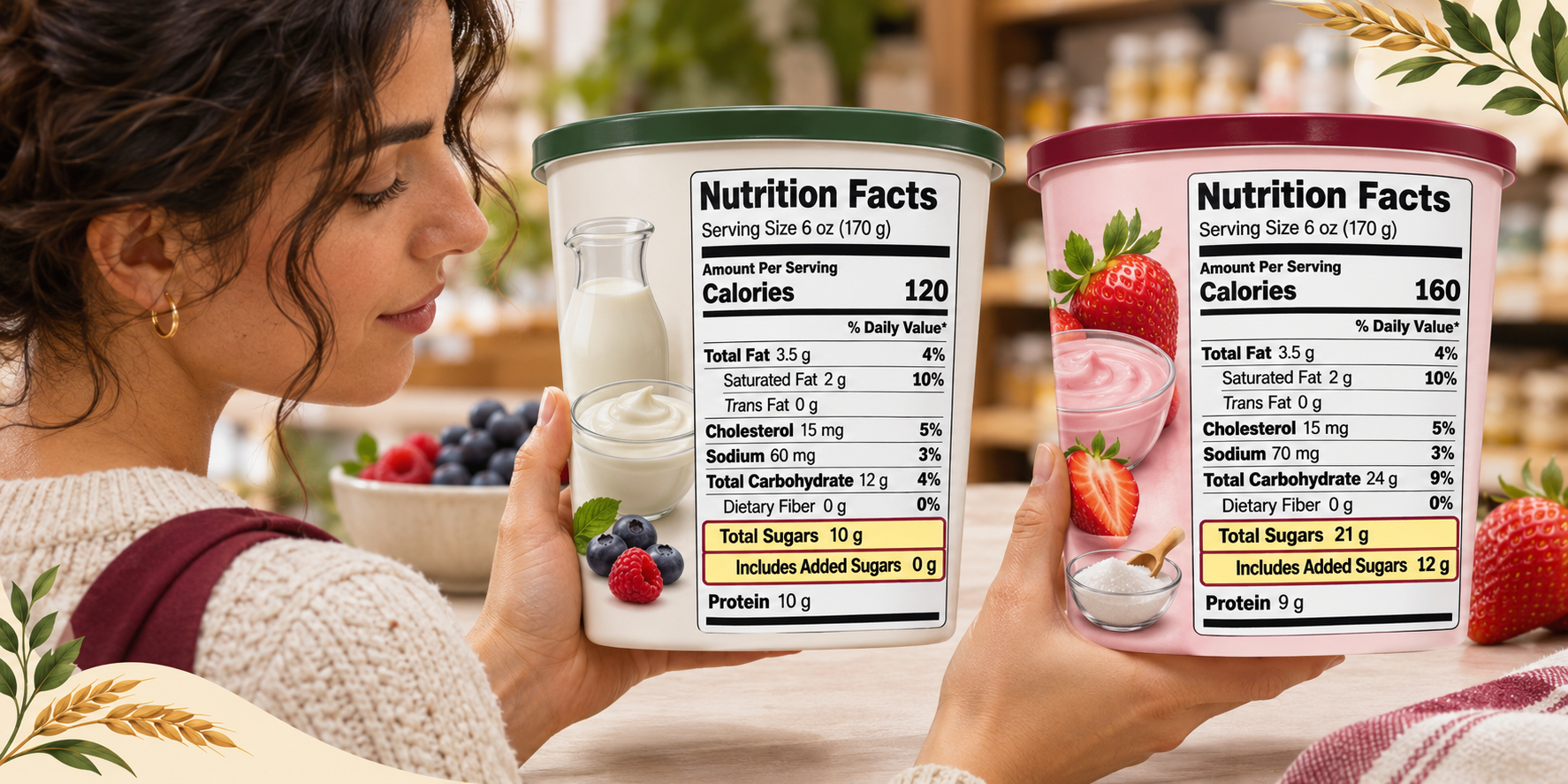
One of the most practical skills we can develop is understanding the difference between Total Sugars and Added Sugars on the Nutrition Facts panel. Total Sugars includes both naturally occurring and added sugars, while the Added Sugars line identifies the amount added during processing or preparation.
For example, plain yogurt naturally contains lactose, which contributes to its total sugar content. A flavored yogurt may contain that same naturally occurring sugar along with additional sweeteners. By comparing the Added Sugars lines, we can better understand the difference between the products.
Serving size is equally important. A bottle containing two servings may appear to have a moderate amount of added sugar per serving, but drinking the entire bottle means consuming twice the listed amount.
The ingredient list can provide additional information. Sugar may appear under names such as cane sugar, dextrose, maltose, corn syrup, honey, molasses, or fruit juice concentrate. Recognizing these terms can help us understand how products are formulated.
Over the years, I have found that education is often more effective than restriction. When people understand what they are purchasing, they can make choices that fit their needs without feeling pressured to follow unrealistic dietary rules.
Reducing Added Sugar Without Losing Flavor
One of the most rewarding parts of working as a chef is discovering how naturally flavorful simple ingredients can be. Cinnamon, vanilla, citrus zest, fresh fruit, roasted vegetables, and aromatic spices can contribute sweetness or flavor complexity without requiring large amounts of added sugar.

Consider a bowl of plain Greek yogurt topped with blueberries, strawberries, cinnamon, and a few chopped walnuts. The fruit provides natural sweetness, while the yogurt supplies protein and the nuts add texture and healthy fats. This combination can be satisfying without the need for a heavily sweetened yogurt product.
Beverages are another excellent place to begin. Replacing one regular soda or sweetened coffee drink with water, sparkling water, or unsweetened tea can meaningfully reduce added-sugar intake. If you enjoy sweetened coffee, gradually reducing the amount of syrup or sugar may be more realistic than eliminating it immediately.
When baking, experimenting with smaller amounts of sugar or using mashed banana or unsweetened applesauce can sometimes work well, although substitutions may change the final texture. As someone who enjoys cooking, I believe healthy changes are more likely to last when the food continues to taste good.
The objective is not to remove every source of pleasure from eating. It is to create a better balance between enjoyment and nourishment.
Creating Healthier Habits for the Entire Family
Reducing added sugar becomes easier when it is approached as a household habit rather than an individual restriction. Children and adults alike can benefit from learning how to recognize added sugars, explore naturally sweet foods, and develop a greater appreciation for different flavors.
One useful approach is to make gradual changes to familiar meals. Replace a highly sweetened breakfast cereal with oatmeal topped with fruit, choose plain yogurt and add your own toppings, or prepare homemade salad dressing using olive oil, vinegar, herbs, and mustard.
These adjustments do not require expensive ingredients or complicated preparation. They simply encourage us to pay closer attention to what goes into our food.
It is also important to remember that a healthy relationship with food includes flexibility. Birthday cake, holiday desserts, and occasional treats can fit within an overall balanced eating pattern. Teaching children that foods are either completely good or completely bad can create unnecessary confusion and guilt.
Instead, we can emphasize variety, moderation, and the importance of nourishing our bodies consistently.
Small Changes Can Make a Meaningful Difference
At The Grainery, our goal is to help customers develop practical nutrition knowledge that supports everyday wellness. Understanding added sugar is one part of that process, and it does not require giving up every food you enjoy.

Start by looking at the beverages you drink regularly, comparing the labels on familiar products, and finding opportunities to incorporate whole foods that provide natural sweetness and valuable nutrients.
In my experience, the most sustainable changes are usually the ones that fit naturally into our lives. A small improvement repeated consistently can be more useful than an extreme approach that becomes difficult to maintain.
The next time you reach for a packaged snack or beverage, take a moment to read the label and consider whether there is an alternative that offers similar enjoyment with less added sugar. You may discover that some of your favorite foods already fit your goals, while others can be adjusted without sacrificing flavor.
Healthy eating is not about eliminating every indulgence. It is about understanding our choices, finding a balance that works for us, and developing habits that support our health over time.
This article is intended for general nutrition education and is not a substitute for individualized medical or dietary advice.

Resources
1. Centers for Disease Control and Prevention — Get the Facts: Added Sugars. Explains added sugars, common dietary sources, and associations with obesity, type 2 diabetes, and heart disease. CDC added sugars overview
CDC
2. American Heart Association — How Much Sugar Is Too Much? Provides practical daily intake recommendations and identifies common sources of added sugar in American diets. AHA added sugar recommendations
American Heart Association
3. U.S. Food and Drug Administration — Added Sugars on the Nutrition Facts Label. Explains the difference between total and added sugars and how to interpret the Daily Value. FDA added sugars labeling guide
FDA
4. U.S. Food and Drug Administration — How to Understand and Use the Nutrition Facts Label. Offers practical guidance on serving sizes, nutrient amounts, and label comparisons. FDA Nutrition Facts guide
FDA
5. World Health Organization — Guideline: Sugars Intake for Adults and Children. Reviews evidence supporting limits on free sugars, including effects on dental health and unhealthy weight gain. WHO sugars guideline
World Health Organization
6. American Heart Association — Added Sugars. Explains naturally occurring versus added sugars and offers practical ways to identify them. AHA added sugars education
American Heart Association
